
Buncombe County Probate Records Office
North Carolina handles estate and probate matters primarily through the Clerk of Superior Court. In Buncombe County, the probate office is the Estates Division of the Clerk of Superior Court. That wording matters because the clerk is not only a file keeper. Buncombe County describes the North Carolina Clerk of Superior Court as an elected judicial official, and the clerk's judicial role includes estates, special proceedings, incompetency, and other clerk-heard matters.
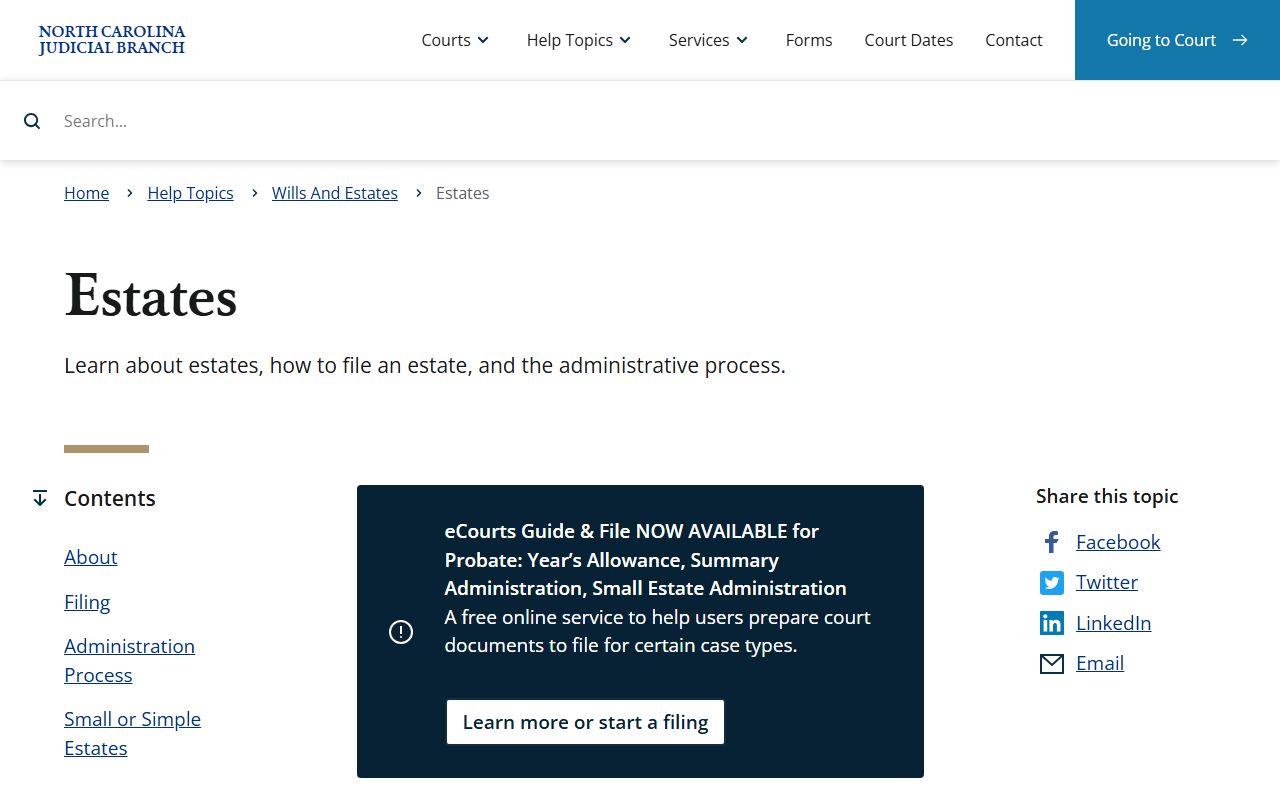
The North Carolina estates help topic explains the statewide estate process used in Buncombe County.
Estates Division of the Clerk of Superior Court
60 Court Plaza
Asheville, NC 28801
828-259-3405
Monday-Friday, 8:00 AM-5:00 PM
One county directory result in the research listed 828-259-3404 for Estates Division, while the court phone list gives 828-259-3405. The court phone list number is used here because it was identified as the direct court contact.
Buncombe County Probate Terms
Estate records use terms that are narrower than everyday property language. The definitions below track the North Carolina estate help topic and the Buncombe County research record.
- Estate
- All money and property owned by a person at death.
- Will
- A document created during life that directs inheritance after death and has no legal effect until probated.
- Probate
- The process of determining that a will is valid, and also a common term for estate administration.
- Personal representative
- The person appointed with authority to collect assets, handle debts, and distribute property.
- Intestate
- Dying without a valid will, so distribution follows state intestacy law.
- Guardianship
- A related clerk matter that may involve restricted minor, incompetency, medical, or private information.
Search Buncombe County Probate Records
Buncombe County probate record access starts with the same court access channels used for civil, special proceeding, and estate case information. The research identifies the NC eCourts Portal for Smart Search and the Search Hearings tool. It also identifies public self-service terminals at the clerk's office and paper estate files at the Clerk of Superior Court in the county where the matter was filed.
- Use Smart Search and filter location to Buncombe County when looking for estate or special proceeding case information.
- Use Search Hearings and choose the Probate or Mental Health hearing type when searching for scheduled estate-related events.
- Visit the clerk's office public terminal for civil, special proceeding, or estate information that is not clear online.
- Ask the Estates Division to view the paper estate file if the file is held in Buncombe County and is public.
- Request copies from the clerk and pay the applicable copy fee when a document copy is needed.
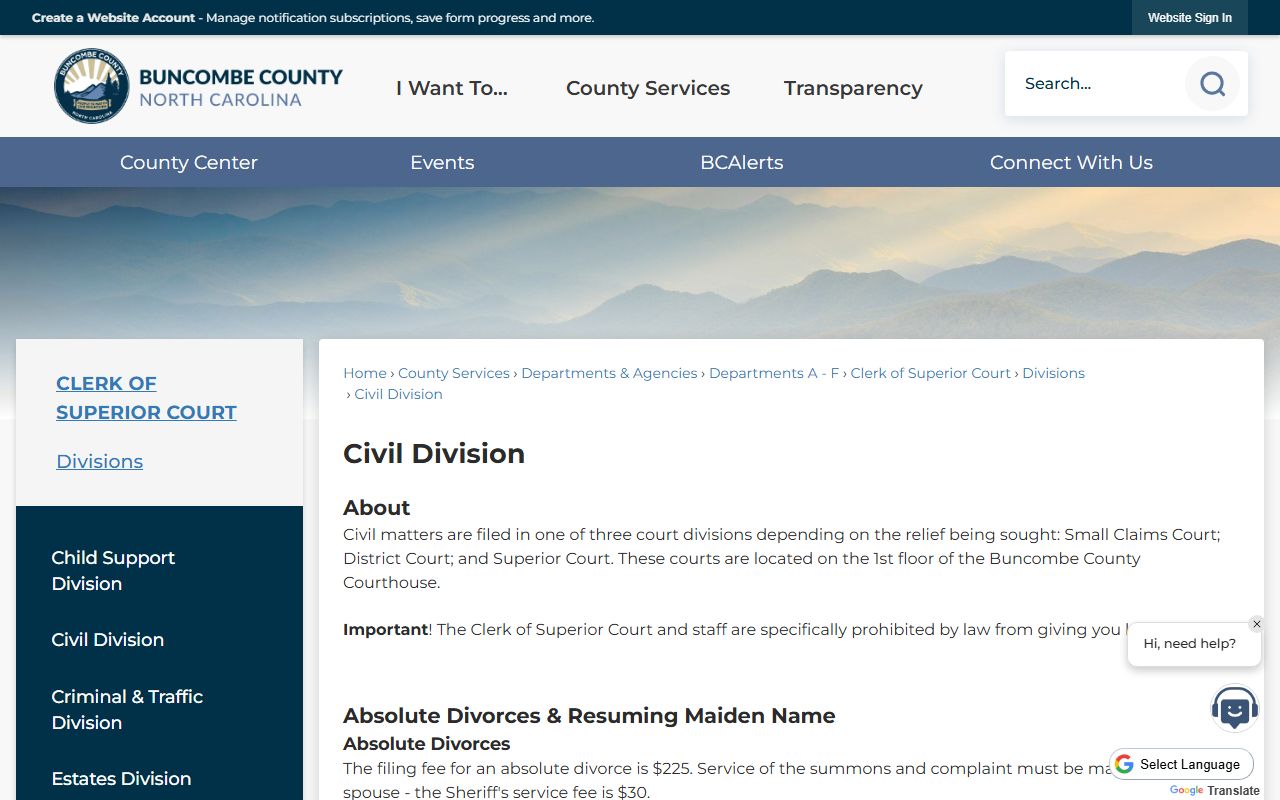
The Buncombe Civil Division page is one county route into civil and related clerk services.
Buncombe County Guide And File Options
North Carolina eCourts Guide & File is available for selected probate workflows. The research identifies year's allowance, summary administration, and small estate administration as available probate Guide & File options. Guide & File prepares selected filings. It does not replace the clerk's review or turn restricted estate material into a public record.
The estate process usually begins by deciding whether the decedent had assets requiring court administration or a valid will that needs probate. After contact with the Estates Division, a filer uses Judicial Branch forms or Guide & File where available, files the will or application, and pays applicable clerk fees. The clerk then reviews appointment of the personal representative when an appointment is needed.
After appointment, the personal representative's work is what creates much of the later Buncombe County estate record. The representative collects assets, gives required notice to creditors, reviews claims, pays valid debts and expenses, distributes remaining property under the will or intestacy law, and files inventories or accountings when required. Those steps can appear as docket events, filed forms, clerk orders, or paper documents in the estate file. A small estate or summary administration may have fewer events than a full administration, but the access path still runs through the clerk.
| Estate step | Record created or reviewed |
|---|---|
| Will or application filed | Opening petition, will if any, applicant information, and filing date. |
| Clerk appointment | Letters testamentary, letters of administration, or an order denying or limiting authority. |
| Creditor period and inventory | Notice, asset inventory, claims activity, and related clerk events. |
| Accounting and closing | Receipts, distributions, accountings, orders, or closing filings when required. |
The Buncombe online marriage license portal is not a probate filing system.
Buncombe County Estate Record Fields
A public estate file can show many steps in the administration process. Not every file has every field, and online case information may be less complete than the paper file. The sample inventory below comes from the Buncombe County research and should be read as a field guide, not a promise that each item appears in every file.
| Field | What it may show |
|---|---|
| Case or file number | The estate or clerk file identifier. |
| Decedent name | The person whose estate is being administered. |
| Applicant or representative | The person asking for authority or serving as personal representative. |
| Filing date | When the estate matter was opened or a filing was entered. |
| Estate type | Full administration, small estate, summary administration, year's allowance, or related guardianship context. |
| Will filed | Whether a will appears in the file. |
| Letters and orders | Letters testamentary, letters of administration, or orders entered by the clerk. |
| Inventory and accounting events | Asset inventory, accounting, creditor notice, and closing steps. |
Buncombe County Probate Copy Fees
The assigned research did not locate a Buncombe-specific probate filing fee table. For that reason, no probate filing amounts are invented here. The confirmed copy fee schedule from the Buncombe Clerk page can still be used when a public estate document copy is available from the file.
| Copy item | Amount |
|---|---|
| Regular copies | $2 first page, $0.25 each additional page |
| Certified copies | $3 |
| Exemplified copies | $10 |
| Probate filing fees | Not located in the assigned research |
For exact filing costs, the prudent route is to confirm with the Estates Division or the current North Carolina Judicial Branch fee schedule before filing. Copy fees apply after the record is located and a public copy can be issued.
Fee questions should be tied to the exact filing or copy being requested. A will filing, a small estate application, a certified copy, and an exemplified copy are not the same service. When the research gives only copy fees, the better record-access answer is to list those copy amounts and send filing-fee questions to the clerk, rather than borrowing a fee from another county or an outdated schedule.
Restricted Buncombe County Probate Records
Estate files are not all open in the same way. The research flags guardianship, incompetency, minor, medical, and sealed materials as restricted. Some public case information may be visible through Smart Search or public terminals, while documents that contain protected identifiers, medical details, minor information, or sealed orders may be withheld or redacted.
North Carolina public records law does not override specific confidentiality rules for court, juvenile, medical, sealed, or protected records. The Judicial Branch public records guidance also says state agencies and employees are not required to create or compile a record that does not exist. For Buncombe County probate records, that means the best path is to ask for the existing case file or copy and let the clerk apply the access rules.
The same rule applies to estate searches by family members, creditors, heirs, and researchers. A public estate file may be open for viewing, but that does not mean staff can prepare a custom family tree, calculate estate value, summarize debts, or answer legal questions about inheritance. The request should identify the decedent, case number if known, filing date range if known, and the specific document needed.
Older estate research may also require checking whether a record is a court estate file or a recorded instrument held by the Register of Deeds. The Register of Deeds has historical recorded records and genealogy resources, but the appointment, inventory, accounting, and clerk order trail belongs with the Estates Division when it is part of a court estate matter.
Access limit: A public terminal result does not mean every paper document in the estate file is public.