
Buncombe County Court Dockets Defined
A docket is the schedule and event trail for a case. In Buncombe County, docket information can show hearing dates, hearing type, case number, party name, attorney name, courtroom, and judicial officer. It may also show case events such as filings, motions, continuances, orders, dispositions, failure to appear entries, and appeals. The docket helps answer when and where a matter is being heard, while the case record answers what was filed and what the court decided.
North Carolina court structure matters when reading Buncombe County court dockets. The North Carolina courts overview places Superior Court and District Court in the Trial Division. Buncombe County is listed as Prosecutorial District 40, Superior Court District 40, and District Court District 40. Superior Court handles felony criminal cases and larger civil cases. District Court handles many misdemeanors, infractions, small claims, domestic, juvenile, magistrate, and lower-dollar civil matters.
The court hierarchy source image below comes from the official North Carolina courts page.
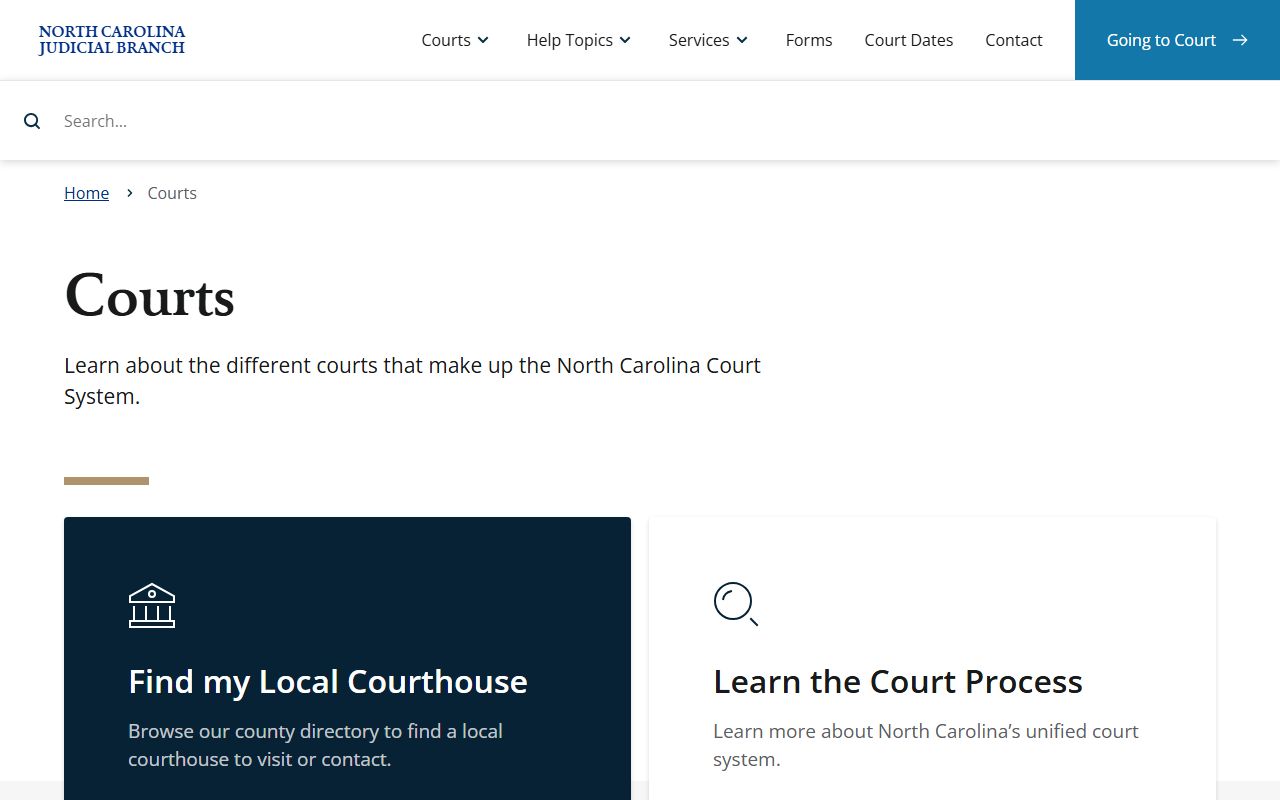
That hierarchy explains why a Buncombe hearing may be listed under Superior Court, District Court, magistrate-related proceedings, or a clerk-heard estate or special proceeding.
Search Buncombe County Court Dockets
The online docket path is the eCourts Search Hearings tool. Research captured the interface fields for county, hearing type, search type, party, business, attorney, judicial officer, and courtroom. The portal can be used when a person needs a future court date or hearing calendar rather than a full case-file review.
- Open Search Hearings in the eCourts Portal.
- Select Buncombe County or all locations if the county is uncertain.
- Choose the hearing type, such as civil, criminal, family, probate, or mental health.
- Select a search type, such as case number, party name, business name, attorney, judicial officer, or courtroom.
- Review the hearing date, time, court location, courtroom, officer, and related case details.
Use Smart Search when the need shifts from the hearing calendar to the broader case record. Smart Search can show case status, file date, charges or claims, party details, docket events, and disposition. For certified copies or full documents, the practical fallback is the Clerk of Superior Court.
If a hearing search returns no match, the next step depends on what is known. A case number may work better in Smart Search than in a party-name hearing search. A recently continued case may have a new date that has not been easy to identify by name. A confidential case type may not appear in the ordinary public view. In those situations, the clerk, the attorney of record, or the proper court office is the safer confirmation path.
Buncombe County Docket Search Fields
Search Hearings is more precise than a broad web search because it starts with court-specific filters. The most important fields are location, hearing type, and search type. A party-name search can help when no case number is known. A courtroom or judicial officer search can help attorneys, witnesses, or observers check a calendar for a specific setting.
| Field Label | Type | Required | Options / Format Notes |
|---|---|---|---|
| Select Location | Dropdown | Yes | Includes All Locations and county options including Buncombe County. |
| Select Hearing Types | Dropdown/multi-select | Yes | All Hearing Types, Civil, Criminal, Family, Probate or Mental Health. |
| Select Search Types | Dropdown/multi-select | Yes | Case Number, Party Name, Business Name, Attorney Name, Attorney Bar Number, Judicial Officer, Courtroom. |
| Sounds Like | Checkbox | Optional | Approximate-name matching for party searches. |
| Last Name / First Name | Text | Conditional | Used for party/person searches. |
| Middle Name | Text | Optional | Narrows person search results. |
| Judicial Officer | Dropdown | Optional | List depends on portal data exposed at the time of search. |
| Courtroom | Dropdown | Optional | Filters a calendar by courtroom where available. |
Buncombe County Court Docket Sources
Buncombe County court dockets reflect the unified state trial court system. The official Superior Court page describes the court level that hears felony criminal cases and larger civil matters. The official District Court page covers the lower trial-court level that handles many misdemeanors, infractions, small claims, family matters, juvenile matters, and traffic cases.
The official Superior Court source is one reference for reading felony and higher civil docket settings.
Superior Court docket entries should be read with the higher trial-court role in mind, especially for felony and large civil proceedings.
The District Court source is the matching reference for misdemeanor, traffic, family, small claims, and other lower trial matters.
District Court calendars can be busy because one court level covers several record types that users often search separately.
- Superior Court: felony criminal hearings, larger civil cases, appeals from District Court, and related docket events.
- District Court: misdemeanors, infractions, traffic, domestic, small claims, juvenile, and many lower-dollar civil matters.
- Clerk-heard matters: estates, special proceedings, incompetency, and other matters handled by the Clerk of Superior Court as judicial officer.
- Magistrate-related matters: warrant, bond, small claims, and first-appearance issues may connect to court or detention-area contacts.
Buncombe County Dockets vs Case Records
A docket and a full case record serve different jobs. A Buncombe County docket helps confirm a hearing, court date, courtroom, officer, and event sequence. The full case record can include pleadings, motions, orders, judgments, charging documents, sentencing details, copy certification, and paper documents that may not appear in the public portal. A docket entry can point to the next step, but it does not replace the official file.
| Point | Court Docket | Full Case Record |
|---|---|---|
| Main use | Check dates, events, courtroom, hearing type, and schedule changes. | Review filings, orders, judgments, charges, disposition, and certified copies. |
| Common access | Search Hearings and public calendar tools. | Smart Search, public terminals, paper file review, or clerk copy request. |
| Detail level | Calendar and event summary. | Case-level record and documents where available. |
| Best fallback | Clerk, attorney, or eCourts if a date is unclear. | Clerk of Superior Court for paper file or certified copy. |
Read Buncombe County Docket Entries
A docket entry may use terms that are short but important. A continuance means the hearing moved to a later date. A disposition means the outcome of a case or charge. A judgment is a final or enforceable court decision. An FTA means failure to appear. The research notes that missing court can lead to an order for arrest, FTA fee, bond forfeiture, driver's license action in motor vehicle cases, or a new criminal offense depending on the matter.
For criminal matters, the Judicial Branch criminal help topic says a judge may strike an FTA, recall an order for arrest, excuse an FTA fee, or address bond forfeiture, but those remedies are discretionary. For traffic matters, the research says motor vehicle cases can also create license consequences. Justice Services directs people who miss court to contact their lawyer immediately, or if they do not have one, to contact the DA, Clerk, or Public Defender as appropriate.
| Docket Field | What It Shows |
|---|---|
| Hearing date and time | The scheduled appearance or calendar setting. |
| Hearing type | Civil, criminal, family, probate, mental health, or another available portal category. |
| Case number | The court's identifier, including case-type letters where listed. |
| Party or attorney | The person, business, lawyer, or bar number tied to the search. |
| Judicial officer and courtroom | The assigned officer and room when exposed by the calendar. |
| Event result | Continuance, order, disposition, FTA, appeal, or other docket activity. |
Buncombe County Docket Changes
Dockets can change because of continuances, weather, emergencies, court operations, or attorney action. Buncombe County had a specific emergency-operations example after Hurricane Helene. The Judicial Branch October 11, 2024 courthouse operations update said the courthouse was open for the week of October 14, 2024, but jurors were excused through the end of the month and people were directed to attorneys, eCourts, or clerk contacts for date questions.
The Hurricane Helene operations source image below comes from that official court update.
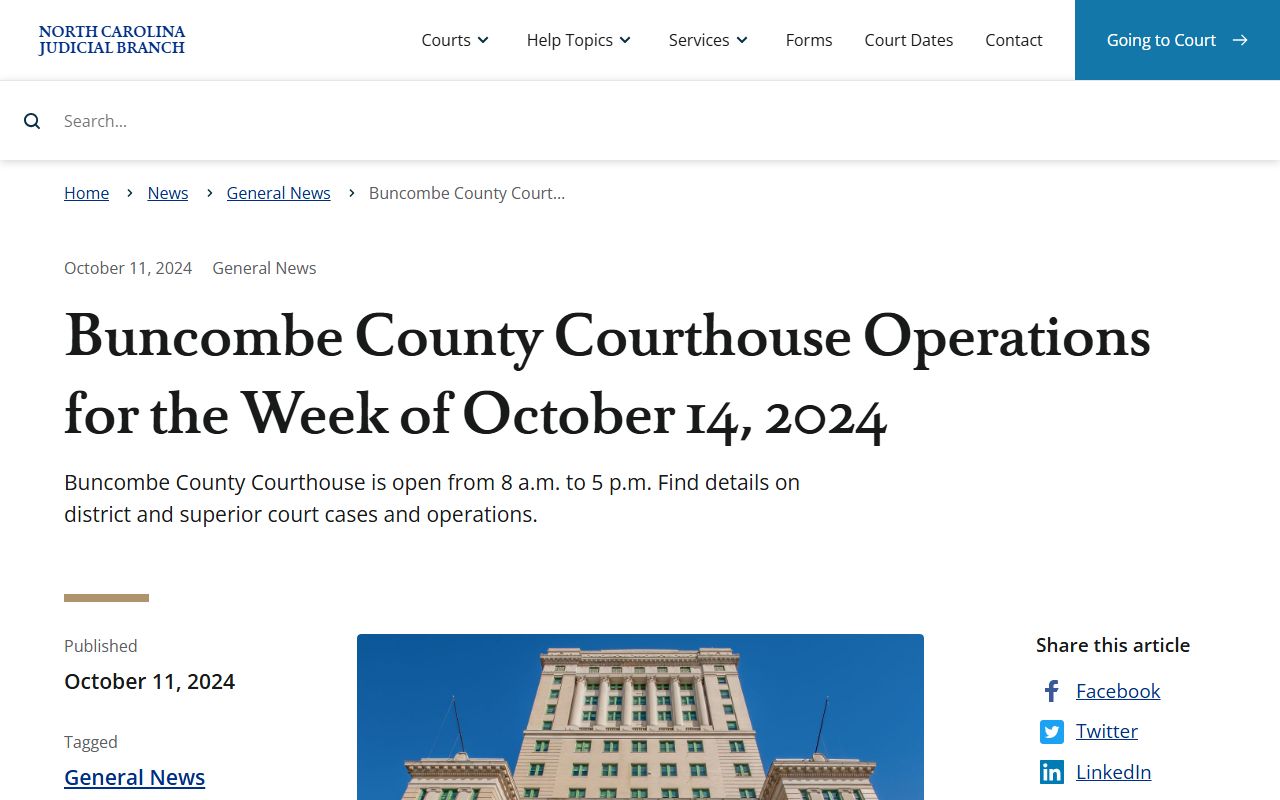
That local event shows why a person should verify a Buncombe County docket close to the hearing date when operations have been disrupted.
Buncombe County news can also matter because county office closures and court closures do not always match. The Buncombe County official news feed is a useful source for county operations, while court dates still follow the North Carolina Judicial Branch schedule and court announcements.
The county news source image is included for local operations context.
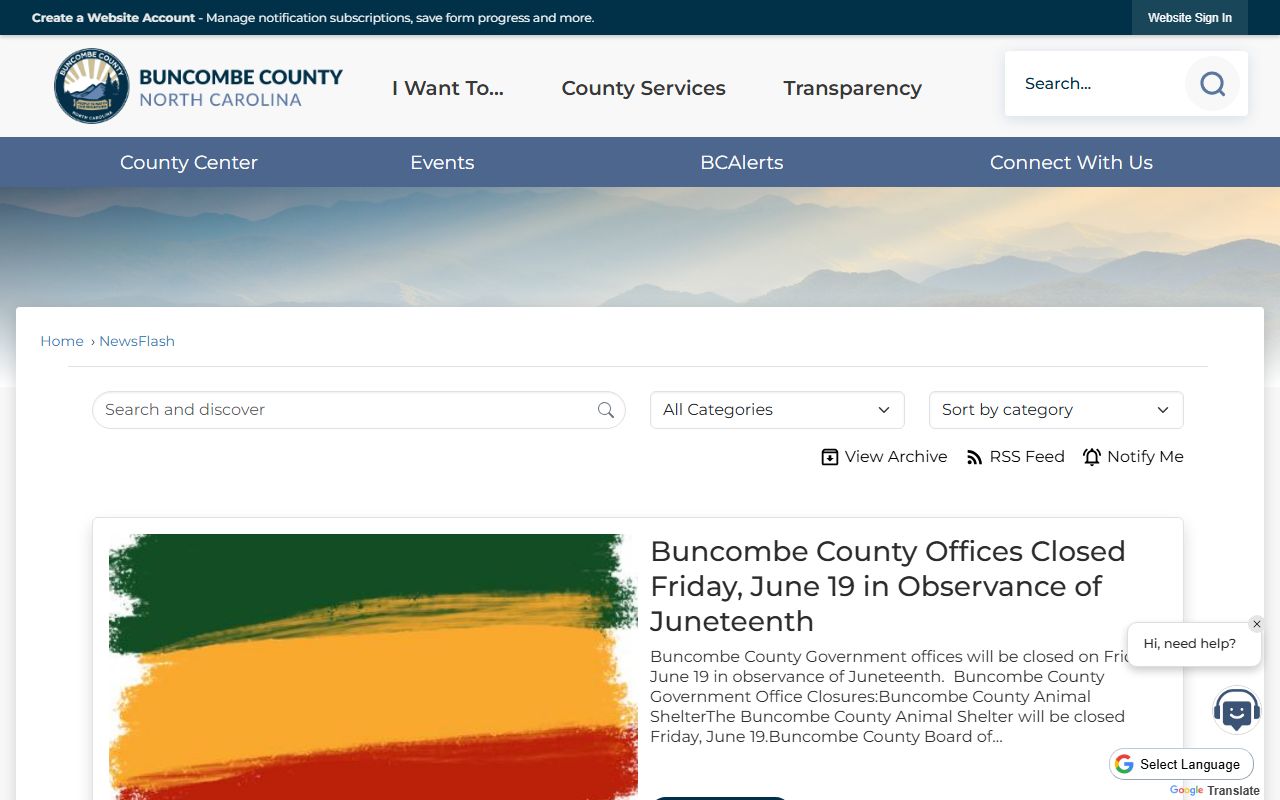
Use county notices as context, then confirm court-specific dates through eCourts, the Clerk of Superior Court, or the attorney of record.
Jurors should be especially careful with emergency updates because jury reporting instructions can differ from regular party hearing dates. The Helene update excused jurors through the end of the month while the courthouse otherwise remained open during the stated week. That kind of split is why a Buncombe County docket check should use the exact role involved: juror, party, witness, attorney, or member of the public.
County administrative news can still be useful when a courthouse visit also involves the Register of Deeds, sheriff front desk, parking deck, or county office hours. Court dates themselves should be checked through court channels because the county and the Judicial Branch may observe different holiday or emergency schedules.
Note: A calendar listing is not a guarantee that a hearing will proceed unchanged, so verify late changes through official court channels.