
Buncombe County Clerk of Superior Court
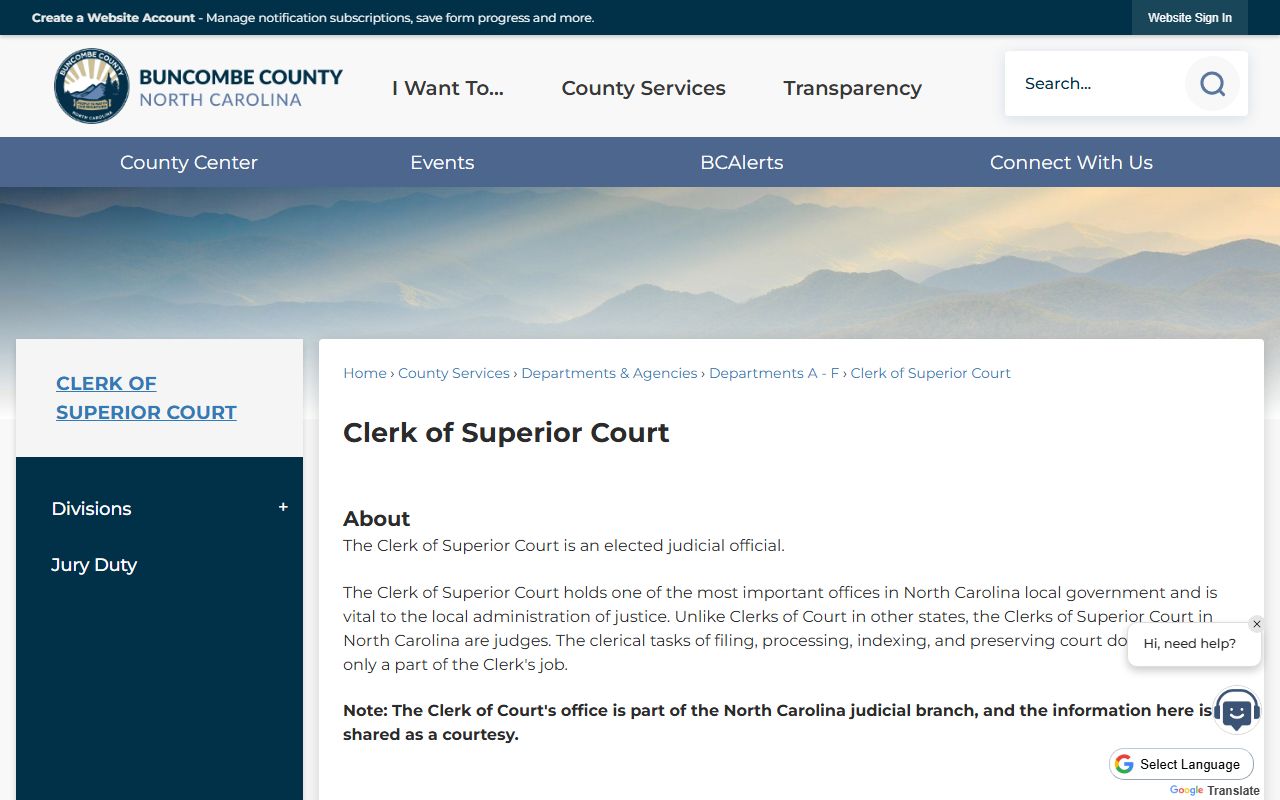
Jean Marie Christy is listed by Buncombe County as the Clerk of Superior Court. The county page describes the clerk as an elected judicial official. It also notes an important North Carolina distinction: Clerks of Superior Court are judges, unlike clerk offices in some other states that are only administrative record offices. In Buncombe County, that judicial role matters for estates, special proceedings, incompetency, and other clerk-heard matters.
The Buncombe Clerk of Superior Court page identifies the local clerk office and copy fee information.
Clerk of Superior Court
Clerk: Jean Marie Christy
60 Court Plaza
Asheville, NC 28801
828-259-3400
Monday-Friday, 8:00 AM-5:00 PM
Buncombe County Clerk Records Held
The Clerk of Superior Court handles court files, not deeds or ordinary vital records. The clerk's clerical duties include filing, processing, indexing, preserving court documents, and providing public access to court records. The office also serves as the local record path for divorce judgments, criminal court records, civil files, special proceedings, estate and probate files, small claims, judgments, liens tied to court proceedings, and traffic or infraction matters.
- Civil files, including lawsuits, judgments, liens, foreclosures, evictions, small claims, and special proceedings.
- Criminal and traffic files, including charges, hearings, judgments, sentencing, costs, and failure-to-appear actions.
- Estate and probate records handled through the Estates Division of the Clerk of Superior Court.
- Divorce judgments entered by the court in Buncombe County.
- Certified, regular, and exemplified copies from public court files when access rules allow release.
The North Carolina courts hierarchy places Buncombe County within the unified General Court of Justice, with Superior Court and District Court in the Trial Division. The clerk's court-record role sits inside that statewide trial court structure rather than a county recorder model.
That structure also explains why the Clerk of Superior Court appears on several record paths that look unrelated at first. A divorce judgment, a felony criminal judgment, an estate order, a small claims file, and a traffic case disposition may all require the same courthouse record office even though they come from different court divisions. The key is whether the record is a court file or a recorded county document.
Search Buncombe County Clerk Records
The main online path is the NC eCourts Portal. Smart Search is used for case information, Search Hearings is used for court dates, Make Payments supports some probation, parole, criminal, and infraction payments, and NC Judgment Search provides judgment index access under the state judgment statute. Public search can be used without a paid account, but the portal requires JavaScript and cookies and may present CAPTCHA checks.
Offline channels remain important. The Judicial Branch court-record help says criminal records can be searched at a public self-service terminal by defendant name, case number, or victim/witness name. Civil, special proceeding, and estate case information can be accessed at public terminals, while paper files must be viewed at the clerk's office in the county where the case is located.
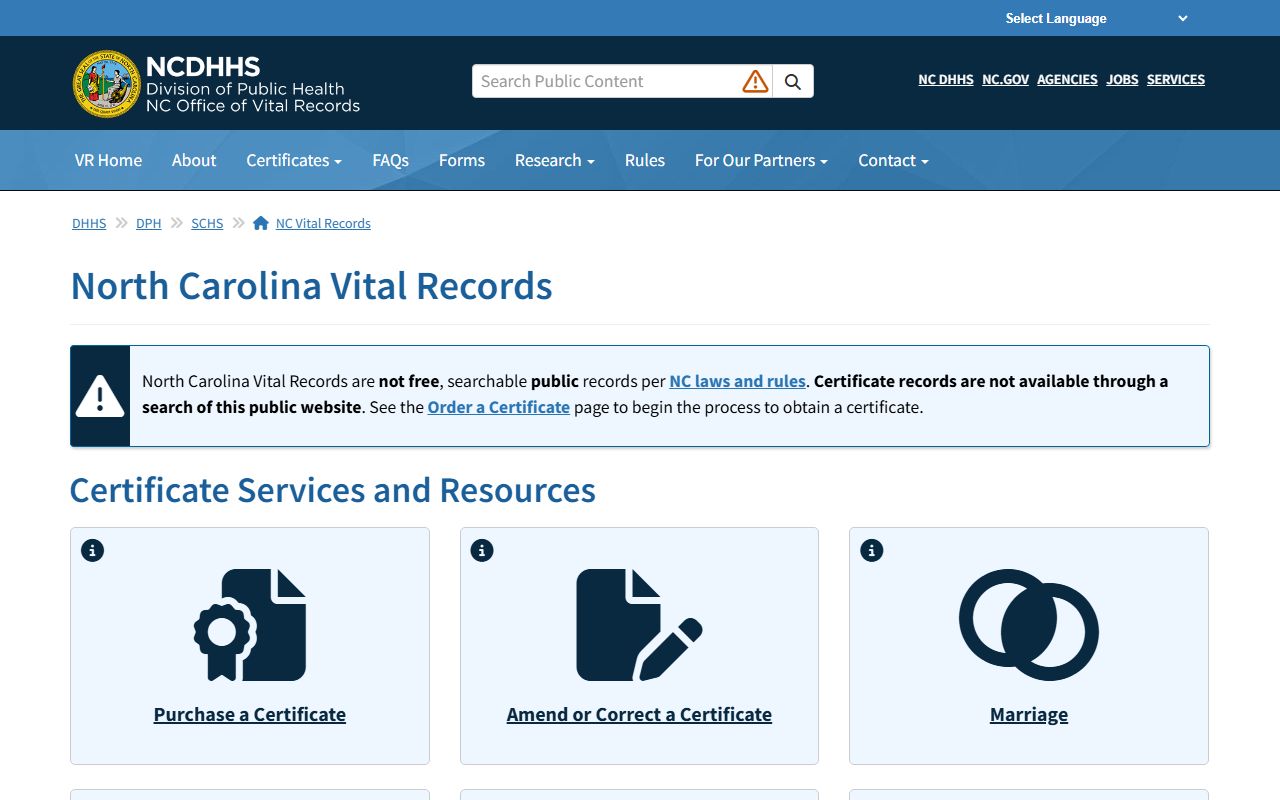
The statewide NC eCourts Portal is the online doorway for Smart Search, Search Hearings, payments, and judgments. The North Carolina Vital Records office is a separate state channel for vital certificates, not the clerk's court case file system.
For background checks, the Judicial Branch guidance is more specific than a general online search. It says people performing background checks should use the county clerk's office, not Portal. Portal results can help locate a case, but clerk-based searches and certified copies are the route for official record use.
Request Buncombe County Certified Copies
Certified copies are used when a requester needs a clerk-authenticated court document. The first step is to identify the file. A case number is best, but party names, filing date, case type, and the specific document requested can help staff locate the record. Some records are searchable through eCourts or public terminals before the copy request is made.
- Identify the case number, party names, and document type, such as judgment, order, estate filing, or divorce judgment.
- Check eCourts or a courthouse public terminal if the file location or case number is not known.
- Contact the proper clerk division, such as Civil Records, Criminal Records, Estates & Probate, or Small Claims.
- Ask whether the document is public, whether certification is available, and which copy fee applies.
- Pay the fee and receive the certified copy through the office process the clerk provides.
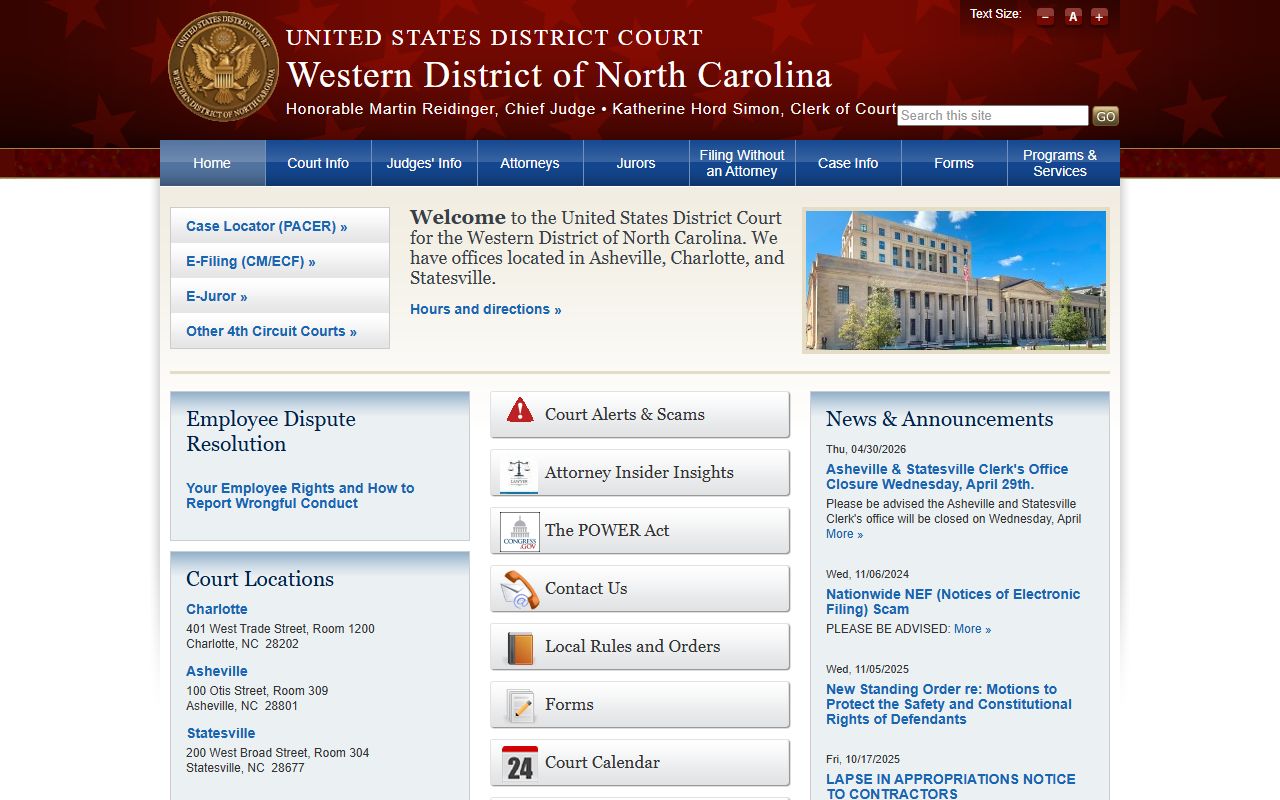
For federal cases involving Asheville, the Western District of North Carolina and PACER are separate from Buncombe County Clerk of Superior Court records.
Buncombe County Clerk Request Fields
The Judicial Branch public records page routes court records first to the court-record help topic and clerk office. It is not a substitute for asking the clerk for a court file copy. The request inventory below reflects the categories and limits documented in the research, including the rule that agencies do not have to create or compile a record that does not exist.
| Field or category | Required | Notes |
|---|---|---|
| Case number | Helpful | Best identifier for court files when known. |
| Party names | Yes for name search | Use defendant, plaintiff, petitioner, respondent, or business name as applicable. |
| Document type | Yes for copy request | Examples include judgment, order, divorce judgment, estate filing, or docket entry. |
| County or location | Yes | Use Buncombe County for local court files. |
| Public records category | Conditional | Judicial Branch categories include court records, background checks, county/city documents, powers of attorney, prisoner records, wills and estates. |
| Existing record limit | Always applies | Under G.S. 132-6.2, agencies need not create or compile a record that does not exist. |
The Judicial Branch public records request page explains when a public records route is appropriate. Public records requests help with some Judicial Branch records, but court files still route first to the clerk and court-record channels.
If the requested material belongs to the Sheriff's Office, Register of Deeds, NC Vital Records, Department of Adult Correction, or a federal court, the Buncombe clerk may not hold it. Sending the request to the correct office saves time and keeps the clerk request focused on actual court files.
Buncombe County Clerk Copy Fees
The Buncombe Clerk page and state fee material provide the confirmed copy and service amounts below. Fees can change, so the clerk's office remains the final source before payment. The table avoids filing fees not located in the assigned research.
| Item | Fee or note |
|---|---|
| Regular copies | $2 first page, $0.25 each additional page |
| Certified copies | $3 |
| Exemplified copies | $10 |
| Limited driving privilege | $100 |
| Criminal record search | $25 statutory search item appears in Chapter 7A Article 28 fee material |
| Civil process by Sheriff | $30 per person in-state, $50 out-of-state, no charge for ex parte domestic violence protection orders |
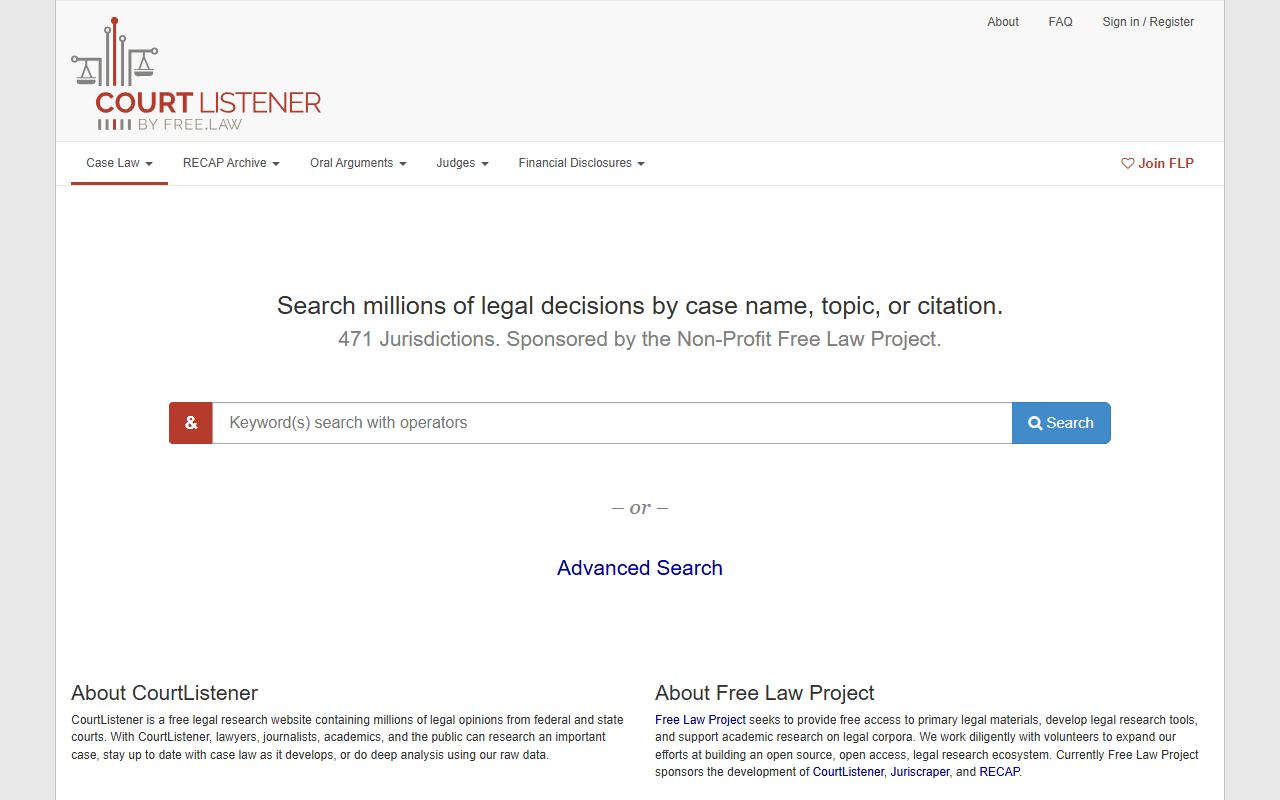
For opinions and docket material outside the official county record systems, CourtListener may be useful, but it is not the Buncombe County Clerk of Superior Court.
Buncombe County Clerk Versus Register
The Register of Deeds is a separate office at 205 College Street. It handles birth, death, and marriage certificates, marriage licenses, deeds, real estate records, powers of attorney, assumed business names, military DD214 records, genealogy resources, slave deeds, and cohabitation records. Its online record search includes recorded deeds dating back to the late 1700s and categories such as marriages, maps, plats, miscellaneous records, and older deed indexes.
Use the Clerk of Superior Court for divorce judgments, criminal court records, civil court files, estate files, special proceedings, small claims, traffic and infraction court matters, judgments, and clerk-authenticated court copies. Use the Register of Deeds for marriage certificates and licenses. Use NC Vital Records for state vital certificate services where appropriate. That office split prevents the most common Buncombe County records mistake.
For federal appellate records, the U.S. Court of Appeals for the Fourth Circuit is another separate system.
The PACER federal case access system is also separate from Buncombe County Clerk of Superior Court records.
Office split: Divorce judgments are clerk records, while marriage certificates and licenses are Register of Deeds records.