
Search Buncombe County Court Records Online
The main online channel is the North Carolina eCourts Portal. Its Smart Search option is labeled for court records and case information, while Search Hearings is used for court dates and hearing calendars. The portal also links payment tools and NC Judgment Search. Public Smart Search is available without starting at the courthouse, but the portal requires JavaScript and cookies, and the research notes a CAPTCHA challenge every ten minutes for anonymous, registered, and elevated access users.
For Buncombe County court records, search with the most stable identifier first. A case number is best when available. A party name can work if it is entered in the portal's last, first middle suffix format. Advanced filters help narrow results to Buncombe County, file dates, case status, case type, date of birth, party type, or business name. Use the full court file or certified clerk copy when a legal use depends on exact wording, exhibits, or an official seal.
- Open the eCourts Portal and choose Smart Search for court record and case information.
- Enter a case number, business name, or person name in last, first middle suffix format.
- Expand Advanced Filtering Options and select Buncombe County when the location filter is needed.
- Use date, case type, case status, and party filters to separate similar names.
- Review the case summary, docket events, charges or claims, hearings, disposition, and available copy path.
The Judicial Branch public records page explains that court records should first route to the court-record help topic and the clerk office, not to a generic public-records form. The public-records path is still useful for Judicial Branch records that are not court files, and it notes that agencies do not have to create or compile records that do not exist.
The source capture for the Judicial Branch request page is shown below.
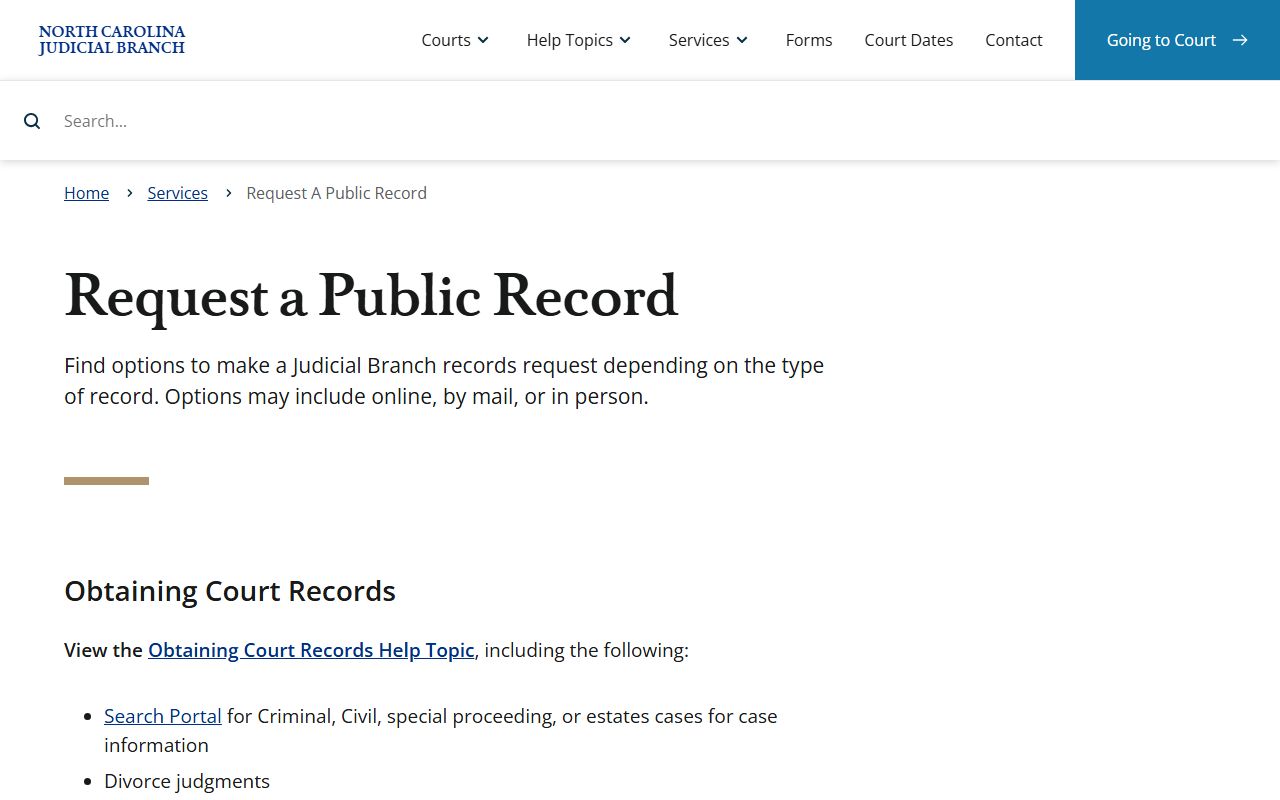
That request page is a fallback for non-case records; active and archived court files still route through the Clerk of Superior Court and eCourts paths.
Buncombe County Court Records Search Fields
Smart Search is broad, so the field choice matters. Buncombe County court records may be found by record number, party name, business name, or advanced party details, but a vague name search can return unrelated cases from other counties if location is not set. Business names with commas need special care because the portal research says a comma can be replaced with an asterisk, with nothing added after the asterisk.
| Field Label | Type | Required | Notes / Format |
|---|---|---|---|
| Record Number or Name | Text | Yes/conditional | Use record number or last, first middle suffix format. Case-number wildcard needs at least four characters. |
| Last Name | Text | Yes/conditional | Name wildcard needs at least three characters plus an asterisk for last name. |
| First Name | Text | Yes/conditional | First-name wildcard needs at least one character plus an asterisk. |
| Middle Name / Suffix | Text/dropdown | Optional | Useful for common names and generational suffixes. |
| Filter by Location | Dropdown | Optional | Select Buncombe County to avoid statewide noise. |
| Search by | Dropdown/radio | Optional | Party Name, Nickname, Business Name, or Sounds Like. |
| Date of Birth From / To | Date | Optional | DOB range narrows party searches where public access allows it. |
| Case Type / Case Status | Dropdown | Optional | Filters civil, criminal, family, probate, mental health, or status categories as available. |
| File Date Start / End | Date | Optional | Limits records to a filing-date range. |
Types of Buncombe County Court Records
North Carolina has a unified General Court of Justice. In Buncombe County, the trial division includes Superior Court and District Court, with the Clerk of Superior Court maintaining the county-level court record office. Superior Court is the primary trial court for felony criminal cases and larger civil cases. District Court handles many misdemeanors, infractions, small claims, domestic, juvenile, magistrate, and lower-dollar civil matters.
The Judicial Branch court-record help topic describes how criminal, civil, special proceeding, estate, divorce, transcript, and audio records are accessed. A Buncombe County court record may include the case summary, docket events, pleadings, orders, judgment, hearing dates, disposition, and copy history. Divorce judgments and estate files are court records, while marriage certificates and deeds are handled by the Register of Deeds.
The help topic source image below comes from the official court-record access material.
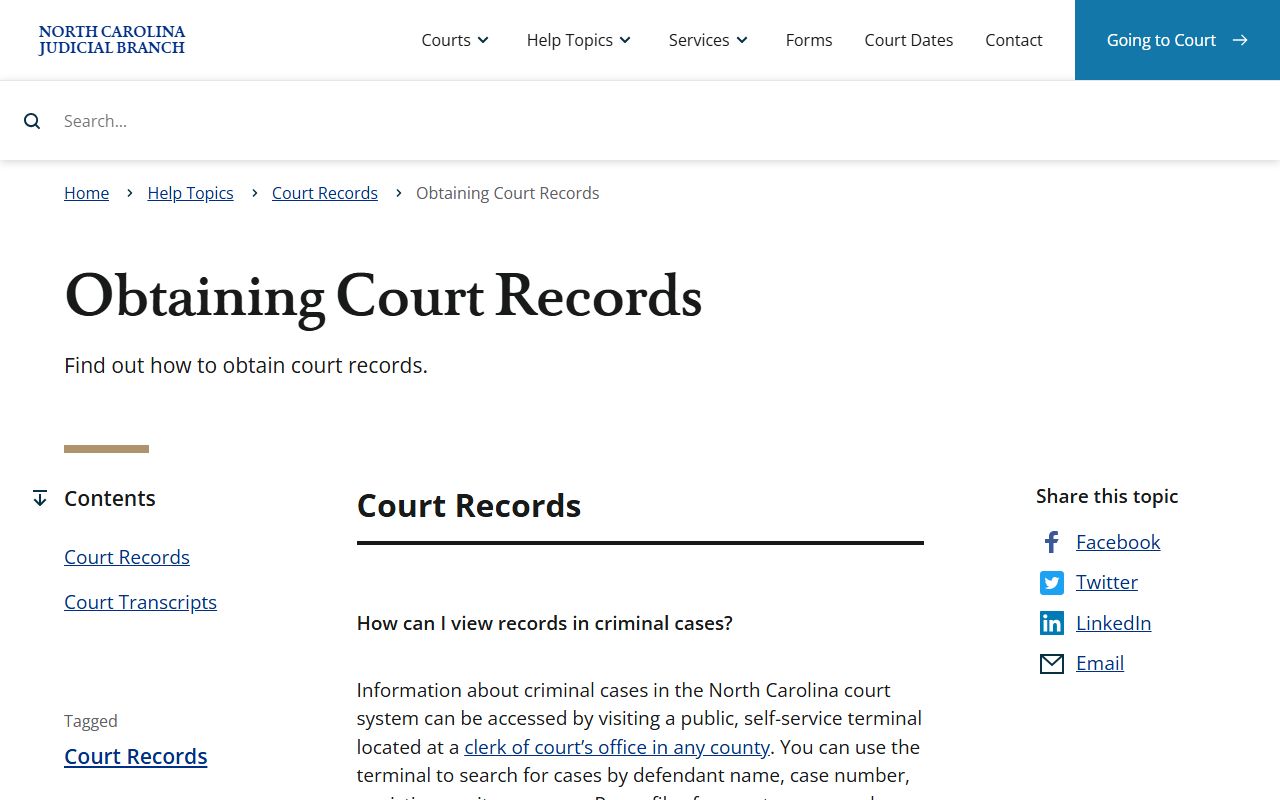
The same distinction matters in Buncombe County because the court office and Register of Deeds sit in separate record systems.
- Criminal files: charges, pleas, motions, hearings, dispositions, sentencing, FTA events, bond details, and orders.
- Civil files: complaints, answers, motions, orders, judgments, small claims, liens tied to court matters, and appeals.
- Family and divorce files: divorce judgments and domestic case materials, with limits for sensitive or sealed content.
- Estate and special proceedings: probate, small estate, summary administration, guardianship, incompetency, and clerk-heard matters.
- Traffic and infractions: citation numbers, court dates, waiver status, payment history, disposition, and failure-to-appear events.
What Buncombe County Court Records Show
A court record is not just a name search result. It is a case-level trail. Buncombe County records can show the court, county, parties, filing dates, hearing dates, docket entries, claims or charges, orders, judgment, disposition, sentence, financial entries, and restrictions. Some documents may be online as case information only, while the paper file or official certified copy remains with the Clerk of Superior Court.
| Field | What It Shows |
|---|---|
| Case number | Year prefix, case-type letters, and sequence, such as a CR criminal case or IF infraction case. |
| Court and county | Buncombe County, Superior Court, District Court, division, courtroom, or judicial officer when listed. |
| Parties | Defendant, plaintiff, petitioner, respondent, business name, attorney name, or attorney bar number. |
| Dates | Filing date, hearing date, court date, arrest date, disposition date, or file date range. |
| Docket events | Filings, summons, hearings, continuances, motions, orders, judgments, dismissals, pleas, sentencing, FTA, and appeals. |
| Financials | Court costs, fines, fees, restitution, bond forfeiture, and copy fees when recorded. |
| Redactions | Protected identifiers, sealed records, expunged matters, juvenile records, and mental health restrictions. |
For plain-language reading, a docket is the chronological list of events, while a judgment is a final or enforceable decision. A disposition is the outcome, such as guilty, dismissed, responsible, not responsible, or judgment entered. A motion is a request asking the court to act, and an order is the court's directive.
Public Access for Buncombe County Court Records
North Carolina public-records law starts with broad access language in Chapter 132, but that does not make every court file public. Specific confidentiality rules still control juvenile records, medical and mental health matters, sealed records, expunged cases, and sensitive identifiers. The court path is practical as much as legal: start with eCourts for case information, then use the public terminal, paper file, or clerk copy request when the portal is not enough.
The North Carolina public records statute source is included here because access rules affect which Buncombe County court records can be viewed.
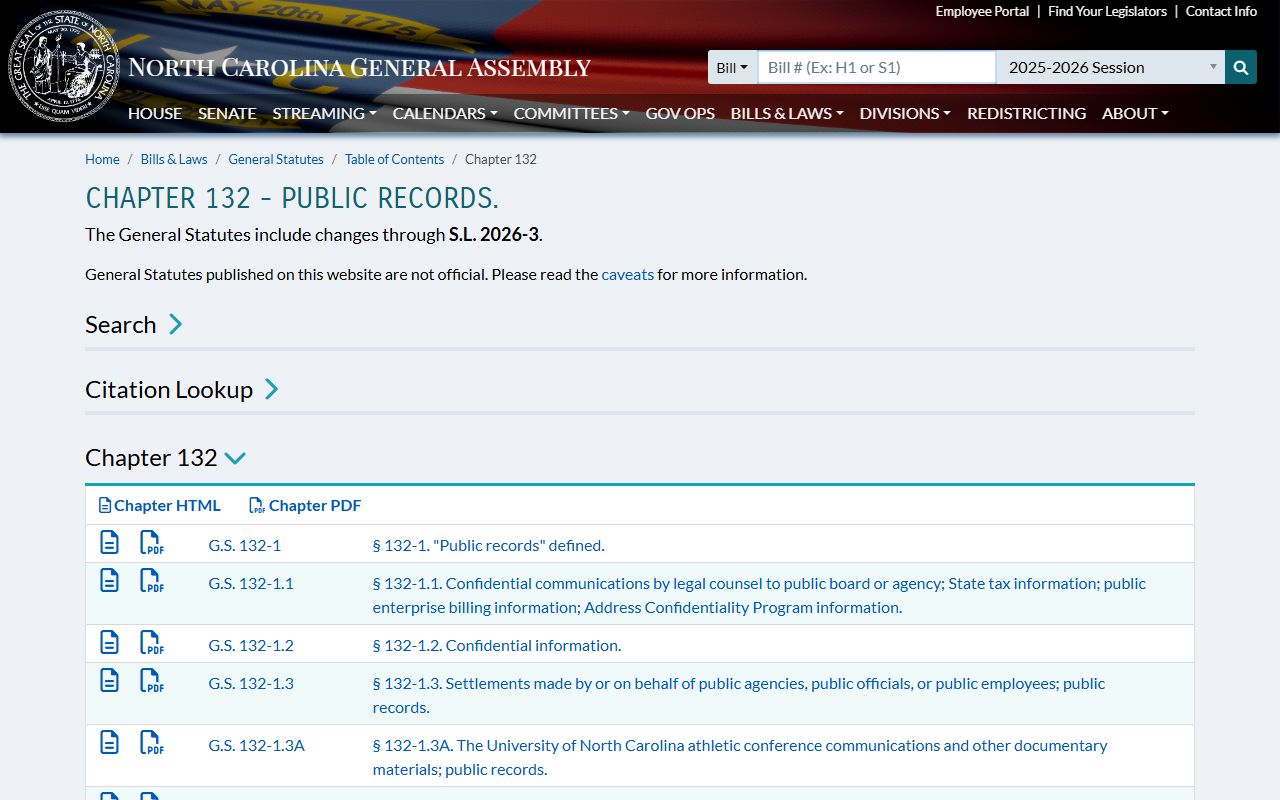
Chapter 132 works with court-specific access rules rather than replacing them, so court files still need the proper clerk or portal channel.
Copy fees are separate from the right to inspect. The Buncombe Clerk page lists regular copies at $2 for the first page and $0.25 for each additional page, certified copies at $3, and exemplified copies at $10. The research also notes a $25 criminal record search item in Chapter 7A Article 28 fee material. Confirm the fee at the time of request if a large file, certification, or statutory search is involved.
The official clerk fee statute source is one of the fee references used for court-record copies and services.
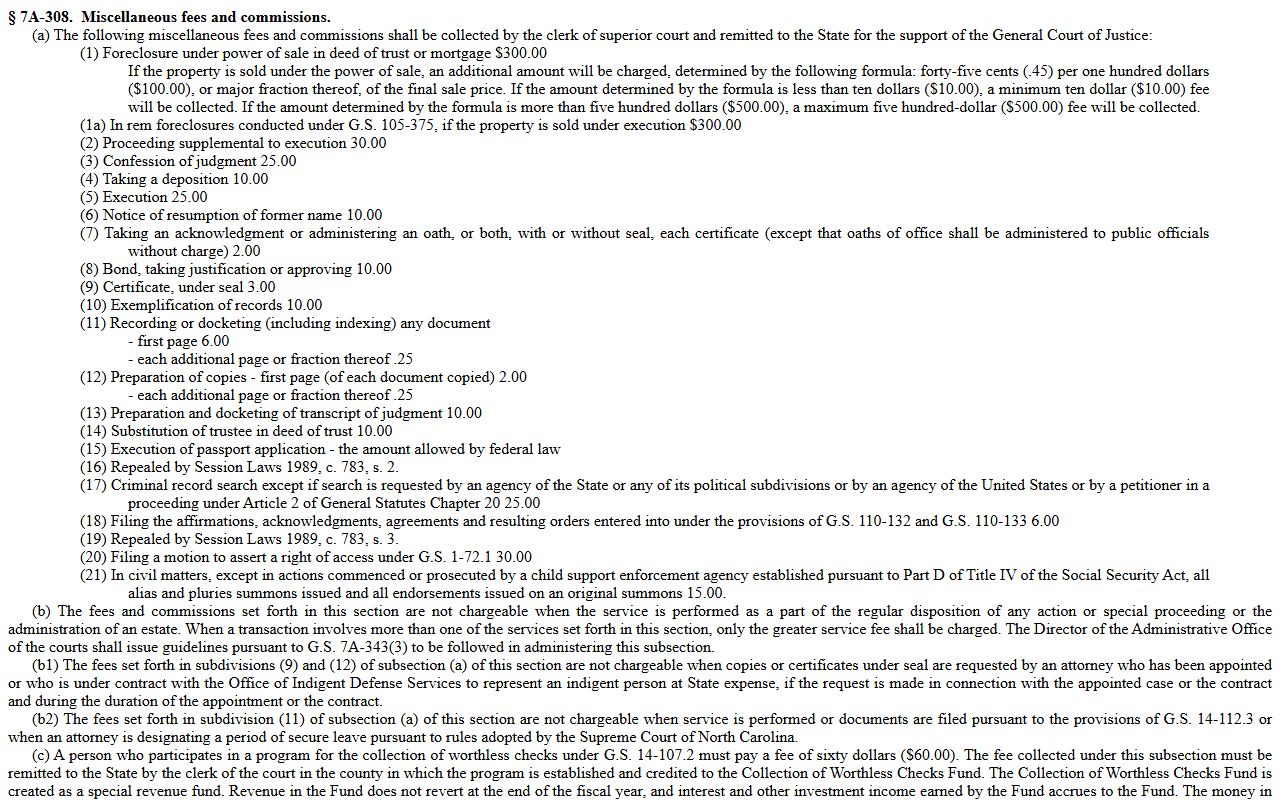
Fees matter most when a person needs a certified or exemplified copy instead of an online case summary.
Buncombe County Court Records Fallbacks
The online portal is only one access channel. The Judicial Branch says criminal case information can be searched at a public self-service terminal in any county clerk's office by defendant name, case number, or victim or witness name. Civil, special proceeding, and estate case information can also be accessed at public terminals. Paper files are viewed at the clerk's office in the county where the case is located, which means Buncombe paper files route to the Buncombe County Clerk of Superior Court.
Use the clerk for paper files, certified copies, older case files, divorce judgments, estate files, and background-check searches. The Judicial Branch specifically warns that background checks should be performed through the county clerk's office, not the portal. Police reports and sheriff records are different records. Those route to the involved law-enforcement agency or to the Buncombe County public records portal when the material is not part of the court file.
Clerk of Superior Court
60 Court Plaza
Asheville, NC 28801
828-259-3400
Monday-Friday, 8:00 AM-5:00 PM
Restricted Buncombe County Court Records
Several Buncombe County court record categories are not open like ordinary civil or criminal files. Juvenile court records are confidential under Chapter 7B. Involuntary hospitalization and some mental health proceedings are confidential. Adoption records are restricted. Domestic violence protective order files can include public components, but they may also contain safety-sensitive material. Public views commonly redact Social Security numbers, financial account numbers, minor names, and other protected identifiers.
Expunction is different from simple sealing. Under G.S. 15A-146, dismissed or not-guilty charges may qualify for petition-based expunction. G.S. 15A-145.5 covers certain nonviolent misdemeanor and felony convictions if statutory requirements are met. If granted, the record is removed from ordinary public access, subject to statutory exceptions. Note: A restricted record may still exist for court or agency use even when it no longer appears in a public search.