
Buncombe County Superior Court
North Carolina's General Court of Justice has an Appellate Division and a Trial Division. The Trial Division is split between Superior Court and District Court. The State Court Structure Map for Buncombe County resolves the primary trial-court page to Superior Court, while the filename remains district-court.html. The North Carolina Judicial Branch lists Buncombe County as Prosecutorial District 40, Superior Court District 40, and District Court District 40.
Superior Court hears civil and criminal cases, including felony cases and civil cases over $25,000. District Court handles many misdemeanors, infractions, small claims, juvenile, domestic, family, magistrate, and lower-dollar civil matters. The Clerk of Superior Court is the county-level court record office and also handles estates, special proceedings, and clerk-heard matters.
The North Carolina Recovery Courts page explains specialty court authority within the statewide court system.
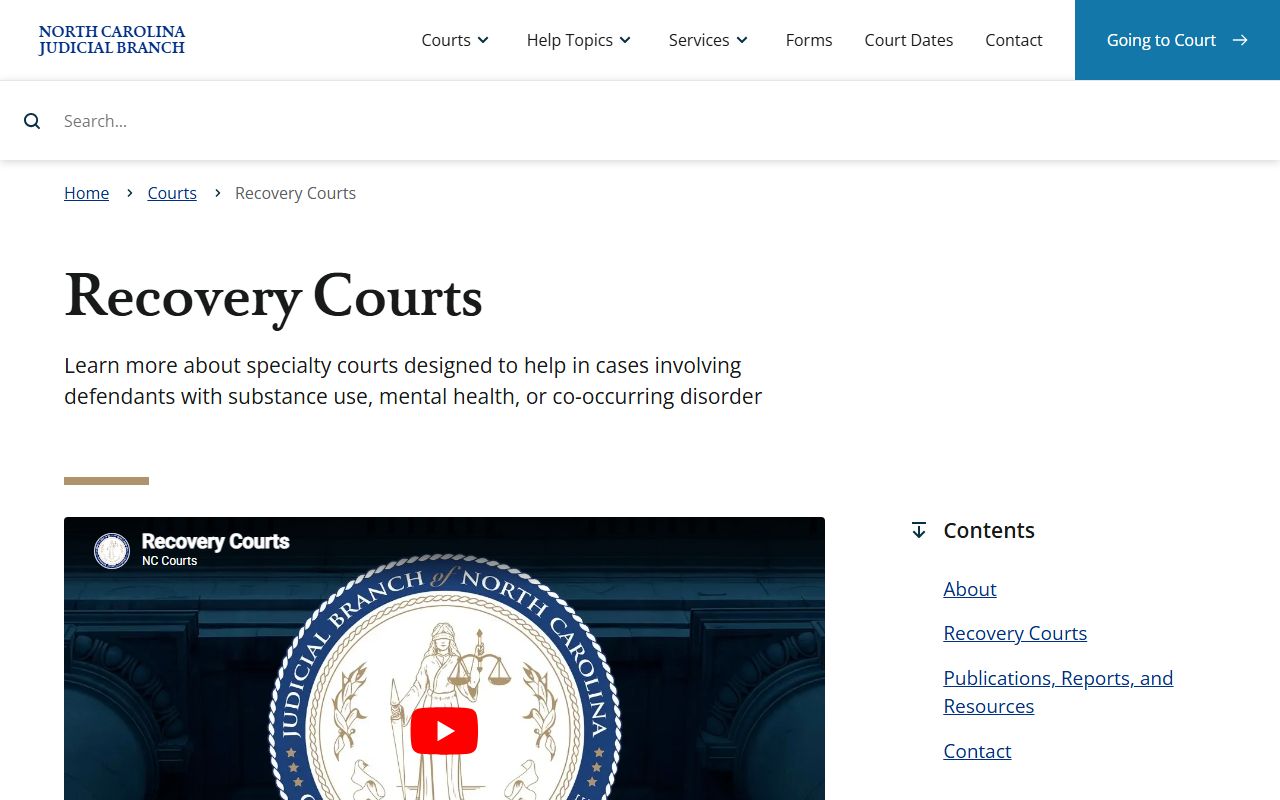
Recovery Courts connect to the Buncombe trial-court system when eligible criminal cases need structured treatment oversight.
Buncombe County Court Districts
The Buncombe court structure is centralized around the courthouse and related downtown court offices. The local table below uses the researched court and office contacts. It includes Superior Court District 40, District Court District 40, magistrate, clerk divisions, prosecution, defense, and specialty court contacts because users often need more than one office to follow a case from charge, filing, hearing, disposition, and appeal.
| Court / office | Type | Address | Phone |
|---|---|---|---|
| Buncombe County Superior Court District 40 | Felony criminal, civil cases over state threshold, District Court appeals/new trials | 60 Court Plaza, Asheville, NC 28801 | 828-259-3416 |
| Buncombe County District Court District 40 | Misdemeanors, infractions, juvenile, domestic/family, small claims | 60 Court Plaza, Asheville, NC 28801 | 828-259-3412 |
| Clerk of Superior Court | Filings, records, estates, special proceedings, copies | 60 Court Plaza, Asheville, NC 28801 | 828-259-3400 |
| Civil Records | Civil court-record access | 60 Court Plaza, Asheville, NC 28801 | 828-259-6367 |
| Criminal Records | Criminal and traffic record access | 60 Court Plaza, Asheville, NC 28801 | 828-259-3402 |
| Estates & Probate | Estate and probate clerk matters | 60 Court Plaza, Asheville, NC 28801 | 828-259-3405 |
| Small Claims | Magistrate small claims | 60 Court Plaza, Asheville, NC 28801 | 828-259-3407 |
| Criminal Magistrate | Warrants, initial process, bond and first appearance path | 20 Davidson Drive, Asheville, NC 28801 | 828-250-4690 |
| District Attorney | Prosecutorial District 40 | 60 Court Plaza / courthouse complex | 828-259-3410 |
| Public Defender | Defender District 40 | Buncombe County Courthouse, 60 Court Plaza | 828-259-3423 |
Superior Court vs District Court
Buncombe County users often need to distinguish Superior Court from District Court and magistrate matters. The state does not use a separate county court or justice court layer like some states. Instead, lower-court functions are handled through District Court and magistrates. Municipal police and citation channels exist, but no separate municipal court of record was located in the official sources inspected.
| Feature | Superior Court | District Court | Magistrate / lower channel |
|---|---|---|---|
| Civil role | Civil cases over $25,000 and other Superior Court matters | Lower-dollar civil, domestic, family, juvenile, and small claims path | Small claims heard by magistrates without jury |
| Criminal role | Felonies and appeals/new trials from District Court in allowed cases | Misdemeanors, infractions, traffic, and first-level criminal matters | Warrants, initial process, bond and first appearance routing |
| Records office | Clerk of Superior Court | Clerk of Superior Court | Clerk and magistrate contacts by matter type |
| Appeal path | Usually Court of Appeals unless direct Supreme Court route applies | Some convictions/orders can go to Superior Court for new trial | Small claims and magistrate matters follow statutory appeal rules |
Buncombe County Case Flow
A Buncombe County case can move through several offices before it becomes a complete court record. Criminal matters may begin with a citation, arrest, warrant, magistrate event, bond, and first appearance. Felony matters move into Superior Court jurisdiction, while misdemeanor and traffic matters often begin in District Court. Civil and family matters may start with filings at the Clerk of Superior Court and proceed through District or Superior Court depending on case type and amount.
Criminal flow: Citation or arrest › Magistrate or first appearance › District Court or Superior Court path › hearings and motions › plea or trial › disposition and sentence › appeal if allowed.
Civil flow: Complaint or petition filed › service › answer or response › hearings or mediation › trial or order › judgment › appeal if allowed.
Traffic appeal flow: District Court conviction in a qualifying misdemeanor traffic case › appeal to Superior Court for a new trial.
The file location follows the court record, not the user's preferred office. Superior Court, District Court, small claims, and estate matters all use the Clerk of Superior Court for court files and copies in Buncombe County. Police reports, sheriff records, Register of Deeds records, federal cases, and DMV driver records use separate agencies even when the same incident or person is involved.
Buncombe County Courthouse Access
The Buncombe County Courthouse is at 60 Court Plaza, Asheville, NC 28801. The main phone is 828-259-3400. Official hours from the North Carolina Judicial Branch are Monday-Friday, 8:00 AM-5:00 PM. The courthouse houses the Clerk of Superior Court, Superior Court, District Court, courtrooms, court-service contacts, estate/probate operations, criminal and traffic records, civil records, family court contacts, and public court services.
The courthouse page says patrons enter at street level, elevators are available to all office floors, and court security should be contacted in an emergency if a person cannot use stairwells. Buncombe court reminder tips point visitors to paid parking at the College Street Parking Deck across from the judicial complex and note that a courthouse security checkpoint is used.
Buncombe County Courthouse
60 Court Plaza
Asheville, NC 28801
828-259-3400
Monday-Friday 8:00 AM-5:00 PM
Buncombe County Treatment Courts
Buncombe County has specialty court programs that connect trial-court supervision with treatment and support. The county Treatment Courts page lists Adult Drug Treatment Court team members, including Judge Alan Thornburg as presiding judge, a coordinator with Buncombe County Justice Services, probation staff, and an Assistant District Attorney for District Attorney's Office, North Carolina 40th Judicial District. The researched handbook excerpt describes the program as a recovery program for people on supervised felony probation.
The Buncombe Treatment Courts page documents the Adult Drug Treatment Court team.
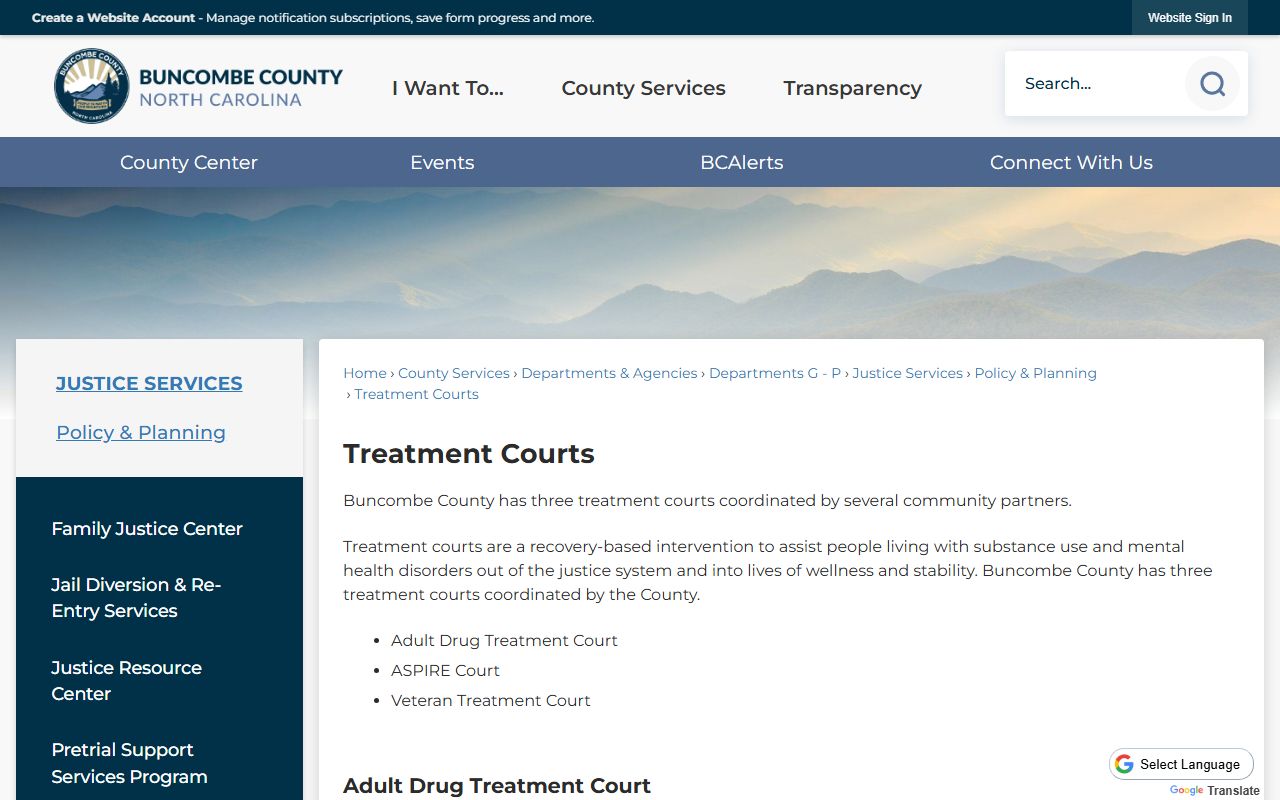
Adult Drug Treatment Court is tied to court supervision, probation, prosecution, treatment providers, and Justice Services coordination.
The Buncombe County Veterans Treatment Court site describes a court and community effort for eligible veterans and their families.
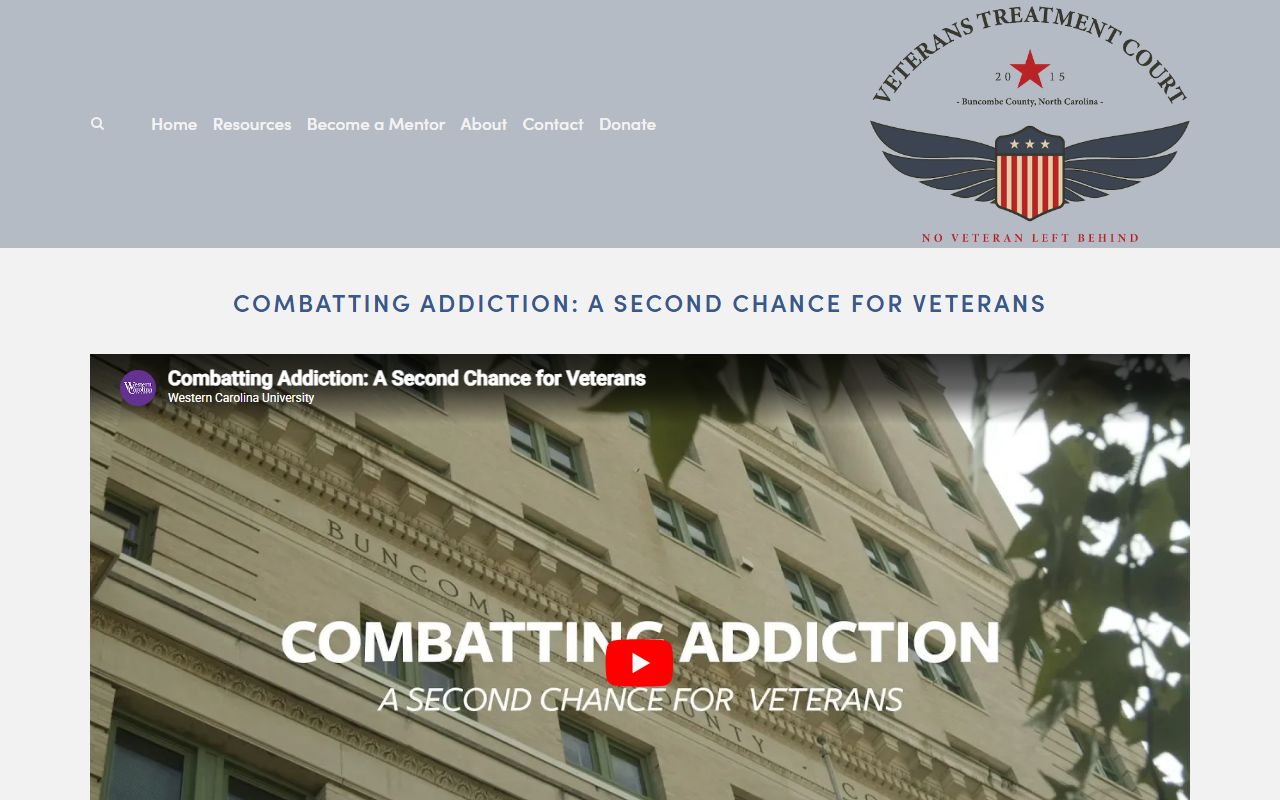
Veterans Treatment Court is a separate specialty track from ordinary criminal docket processing.
Buncombe County Justice Services
Buncombe County Justice Services provides local public-safety and court-support context, including alternatives to incarceration, court support, and coordination with court and public-safety partners. Related research contacts include Pretrial Release at 828-250-6285 and Day Reporting Center at 828-250-4281. These services do not replace the Clerk, judge, prosecutor, or defense counsel, but they help explain local case-management pathways around the courthouse.
The Buncombe Justice Services page is the official county source for those support functions.
Justice Services context helps separate court records from local supervision and support programs.
Buncombe Superior Court vs Federal Court
Buncombe County state court is separate from federal court. Asheville is in the U.S. District Court for the Western District of North Carolina. The federal courthouse is the United States Courthouse, 100 Otis Street, Room 309, Asheville, NC 28801. Federal court hours from the Asheville page are 8:30 AM-12:30 PM and 1:30 PM-4:00 PM Monday-Friday, closed federal holidays. The federal clerk phone is 828-771-7200.
Federal criminal, civil rights, federal-question civil, diversity civil, immigration-related prosecutions, federal drug or firearm offenses, and federal habeas matters may appear in federal court rather than Buncombe County Superior Court. Federal case access uses PACER, CM/ECF for authorized users, and sometimes CourtListener for opinions or some docket material. Appeals from the Western District go to the U.S. Court of Appeals for the Fourth Circuit.
The Western District Asheville courthouse page gives federal address, hours, and phone details.
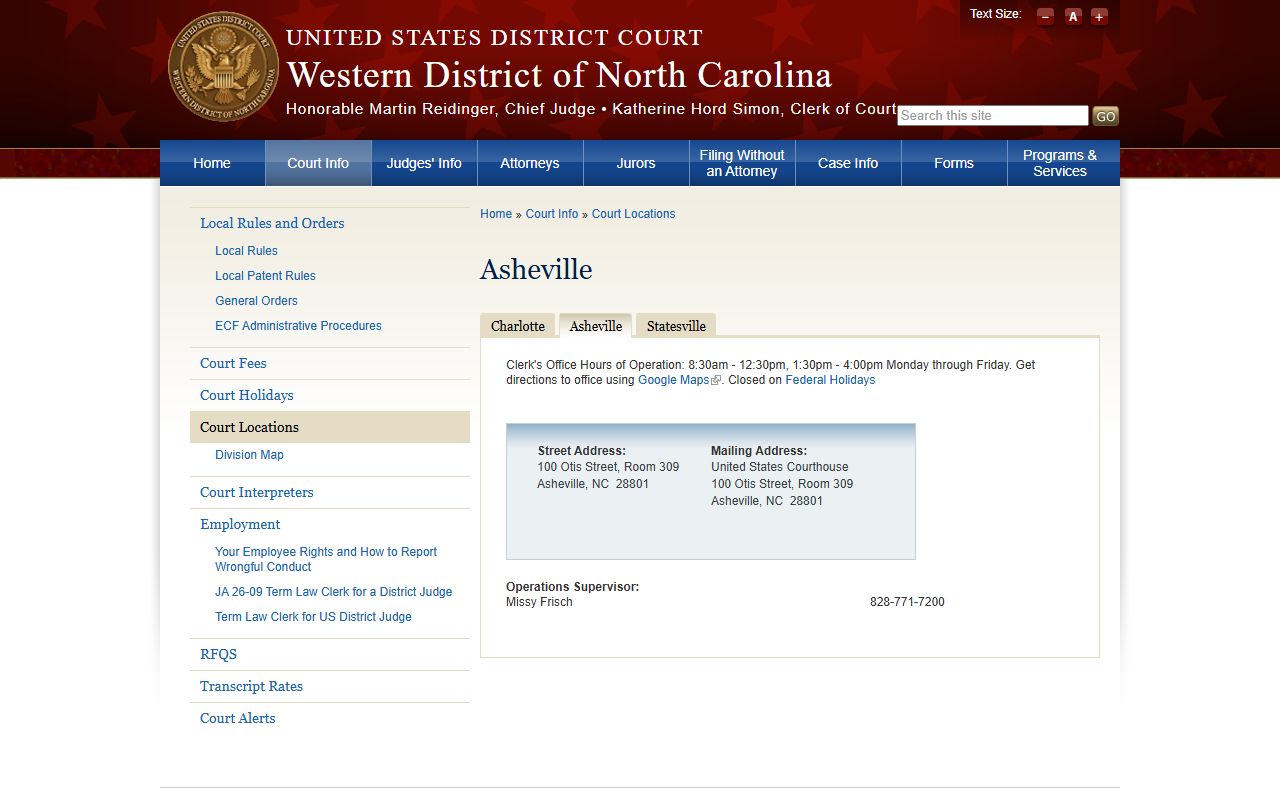
Federal courthouse records do not replace state Superior Court or District Court records at 60 Court Plaza.
The Western District Asheville Division directions page supports the separate federal courthouse access path.
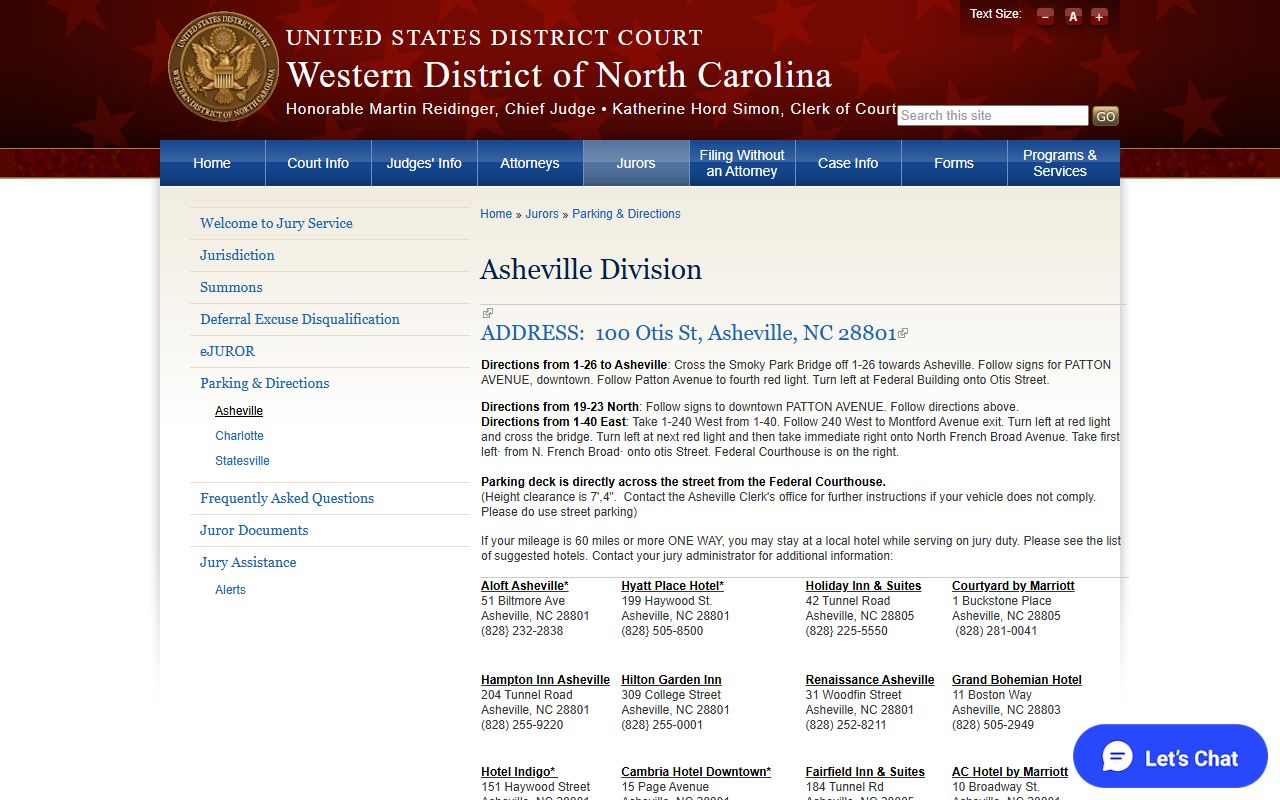
The Asheville Division directions source is useful only when the case is federal, not when the case is in Buncombe County Superior Court.
Buncombe County Appeals Path
Appeals depend on the case type. District Court misdemeanor and infraction traffic matters may begin in District Court, and certain misdemeanor convictions can be appealed to Superior Court for a new trial. Superior Court convictions and orders usually go to the North Carolina Court of Appeals, unless a direct Supreme Court route applies. Capital murder appeals with a death penalty go directly to the Supreme Court of North Carolina. Specialized and administrative matters may follow different statutory rules.
Note: Court dates and case status should be confirmed through eCourts, the Clerk of Superior Court, or the attorney of record before travel.
For record searches, this means the Superior Court page should be read with the District Court and clerk roles in mind. A felony case may be a Superior Court matter, but a related first appearance, warrant, jail booking, traffic citation, or misdemeanor companion charge can point to another Buncombe County access channel.