
Buncombe County Arrest Records and Charges
Buncombe County arrest records are tied to the arrest or booking event. The sheriff detention research says people charged by local law-enforcement agencies in Buncombe County are brought to the Buncombe County Detention Facility on a pretrial basis to wait for court dates. The Police-to-Citizen detainee search can show jail-side information such as name, age, height, weight, dates, holding facility, bond, arresting agency, primary charge, and charge details when settings expose them.
Court charge records begin on the court side. A magistrate may handle a warrant or first bond issue, law enforcement may obtain a felony warrant, and the District Attorney decides how criminal cases are prosecuted. The charge then appears in the case record through the Clerk of Superior Court and eCourts. For custody and booking details, use the jail roster. For final pleas, disposition, and sentence, use Buncombe County criminal court records.
The Buncombe Criminal and Traffic Division source supports the court-record path for criminal and traffic matters.
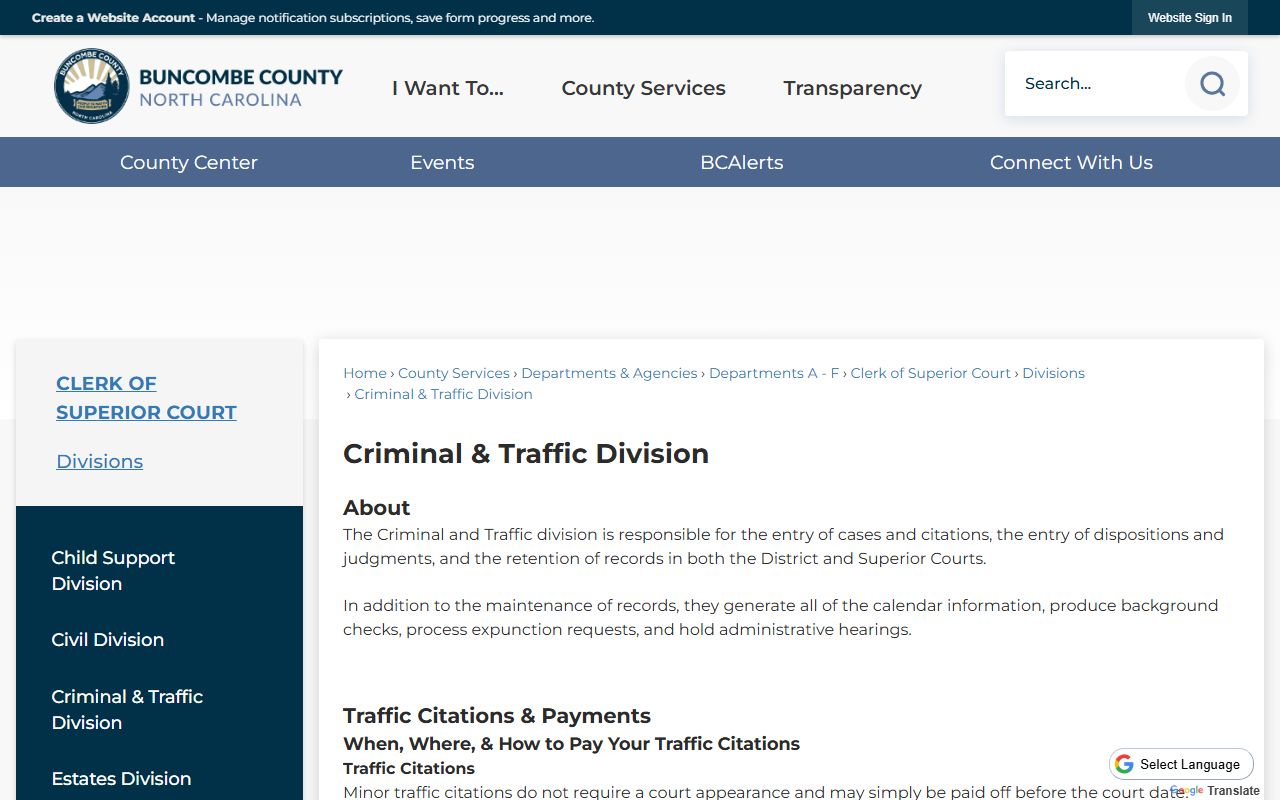
That local court-office source anchors the distinction between jail booking data and court charge records.
Arrest Record vs Charge Record
One arrest can lead to no filed charge, one filed charge, or several separate charges. It can also lead to charges that later change. Reading Buncombe County arrest records and court charges together helps separate the booking event from the formal court accusation and the later case outcome.
| Point | Arrest Record | Court Charge Record |
|---|---|---|
| Main source | Sheriff, detention, arresting agency, or public-records request. | Clerk of Superior Court and eCourts case record. |
| What it shows | Booking, arrest date, agency, custody status, bond, and initial charge data when exposed. | Filed charges, case number, docket events, charge status, plea, disposition, and sentence. |
| Best lookup | Detainee search, sheriff records request, or agency contact. | Smart Search, public terminal, paper file, or clerk copy request. |
| Limit | Does not prove a charge ended in conviction. | Does not always include full booking detail or jail profile data. |
Find Buncombe County Arrest Records
Start with the record type needed. For active custody or booking detail, use the sheriff's detainee search and jail contacts. For charges after arrest, use eCourts Smart Search by defendant name or case number. For court dates, use Search Hearings. For records not visible online, the Buncombe County public records portal is the sheriff/county fallback, while the Clerk of Superior Court is the fallback for court files and certified copies.
- Check whether the need is jail booking detail, a filed charge, a court date, or the final case outcome.
- Use Smart Search for charge records once the case is opened in court.
- Use Search Hearings for upcoming dates, courtroom, judicial officer, or hearing type.
- Use the sheriff/county public records portal for law-enforcement records outside the court file.
- Use the Clerk of Superior Court for certified copies, paper files, and background-check searches.
The eCourts Make Payments and citation search source is included because charge and case-number searches overlap with criminal and infraction payment tools.
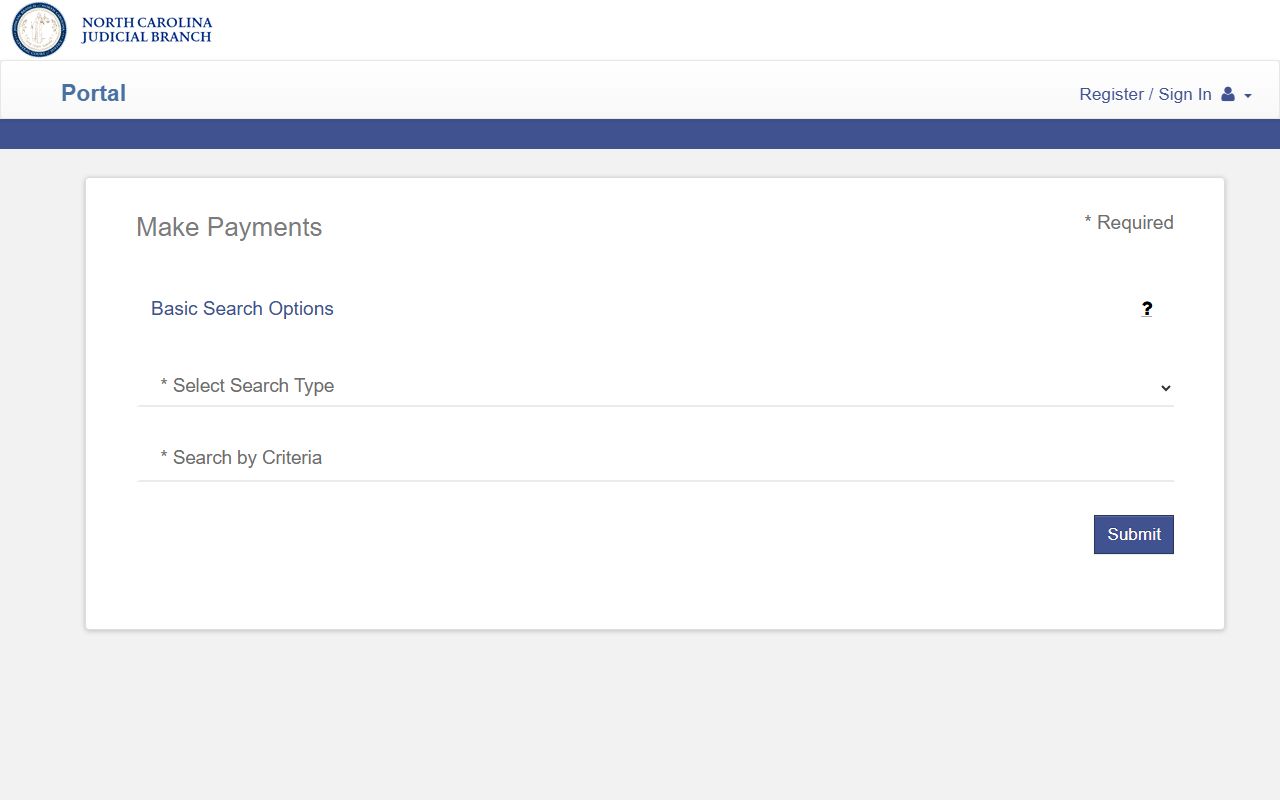
The payment tool is not a full arrest database, but its case-number and party-name fields show how court charge records are indexed.
Buncombe Charges After Arrest
Charges after arrest reach the court through charging documents or warrant-related processes. The research identifies indictment as a grand-jury felony charging document and information as a prosecutor-filed formal charge in some contexts. Complaints and citations can also start lower-level criminal or infraction matters. In Buncombe County, misdemeanor citizen-initiated warrant requests go to the Magistrate's Office, while only a deputy sheriff or police officer can obtain a felony warrant on a person's behalf.
| Document | Who Drives It | Common Use | Record Impact |
|---|---|---|---|
| Complaint or citation | Law enforcement, complainant process, or prosecutor depending on context. | Misdemeanor, infraction, or lower-level charge path. | May create a case number, charge entry, hearing date, or payment/waiver path. |
| Information | Prosecutor. | Formal prosecutor-filed charge in some contexts. | Shows the offense filed by the State and later docket activity. |
| Indictment | Grand jury. | Felony charging document. | Moves a felony charge into the Superior Court case record. |
The Sheriff FAQ source explains the magistrate and warrant path for misdemeanor complaints and felony warrant limits.
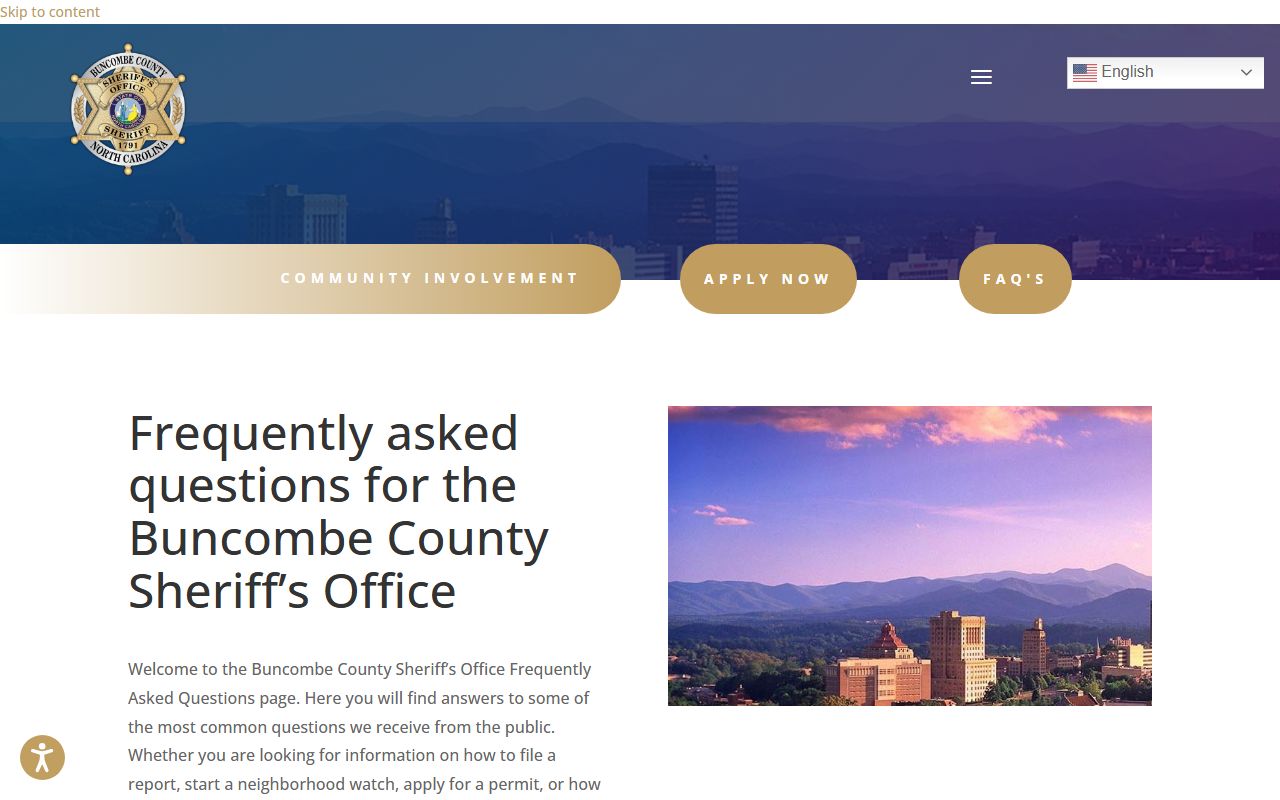
That FAQ is useful because the arrest-to-charge pathway may start with a magistrate before it appears as a court case entry.
Magistrate Warrant DA Roles
The Buncombe County Magistrate's Office is the official local warrant contact identified in the research. It is located at 20 Davidson Drive, Asheville, NC 28801, and the criminal magistrate phone is 828-250-4690. The sheriff FAQ says a responsible adult can request a misdemeanor warrant if they can explain the reason and provide evidence or sworn testimony, though the magistrate may require a law-enforcement report where the crime occurred.
The District Attorney for Prosecutorial District 40 prosecutes criminal cases filed in the district, prepares the criminal trial docket, and advises law-enforcement officers. The court directory lists the DA phone as 828-259-3410. The Public Defender handles appointed counsel for eligible defendants and is listed at 828-259-3423. The Clerk of Superior Court keeps the filed court record and criminal record copies.
Buncombe Charge Status Table
Charge status tells whether a filed accusation is still pending, changed, ended, or tied to a later outcome. Status must be read with the docket and disposition. A charge can be reduced or dismissed without becoming a conviction. A failure to appear can add court events that affect bond or create an order for arrest.
| Status | What It Means | Where to Check |
|---|---|---|
| Pending | The charge has not reached a final outcome in the visible case record. | Smart Search and Search Hearings. |
| Amended or reduced | The filed charge changed before disposition or plea. | Docket events and charge list. |
| Dismissed | The charge ended without conviction on that count. | Disposition field and docket events. |
| Not guilty | The charge did not result in guilt after trial or adjudication. | Disposition or judgment entry. |
| Guilty | The charge resulted in a guilty plea or finding. | Disposition, judgment, and sentence. |
| FTA or order for arrest | Missed court or a court order created an additional event. | Criminal docket, warrant/order entries, magistrate or clerk contact. |
Bond Fields After Arrest
Bond fields can appear in jail and court records. The jail profile model in the research includes total bond amount, bond type, bond status, bond amount, court date, docket number, arrest date, release date, holding facility, booking agency, arresting agency, and charge status. The glossary identifies secured bond, unsecured bond, written promise, and surety. Bond information is a release-control field, not proof of guilt.
- Secured bond
- Release requires money, property, or security.
- Unsecured bond
- No money is paid up front unless the defendant fails conditions.
- Written promise
- A promise to appear without a money deposit.
- Surety
- A bondsman or person guaranteeing appearance.
Charges vs Convictions
A court charge is not a conviction. Buncombe County arrest records may show a person was arrested, and court charge records may show the State filed an accusation. A conviction appears only after a guilty plea, guilty verdict, or qualifying judgment. Always read the disposition before treating a charge as an outcome.
| Point | Charge | Conviction |
|---|---|---|
| Meaning | Accusation filed after arrest or investigation. | Finding or plea of guilt. |
| Timing | Early in the court case. | At disposition or judgment. |
| Can change? | May be amended, reduced, dismissed, or superseded. | May lead to sentence, probation, costs, appeal, or expunction review. |
| Reader risk | Does not prove guilt. | Still requires checking sentence, appeal, and restriction status. |
Access Limits for Buncombe Arrest Records
The Buncombe County public records request portal is the county and sheriff fallback for law-enforcement records not shown online. Active investigations, confidential juvenile information, sealed materials, redacted identifiers, and nonpublic law-enforcement records can limit access. Court case records use the Clerk of Superior Court, eCourts, public terminals, and paper-file channels instead.
The county records request source image appears below.
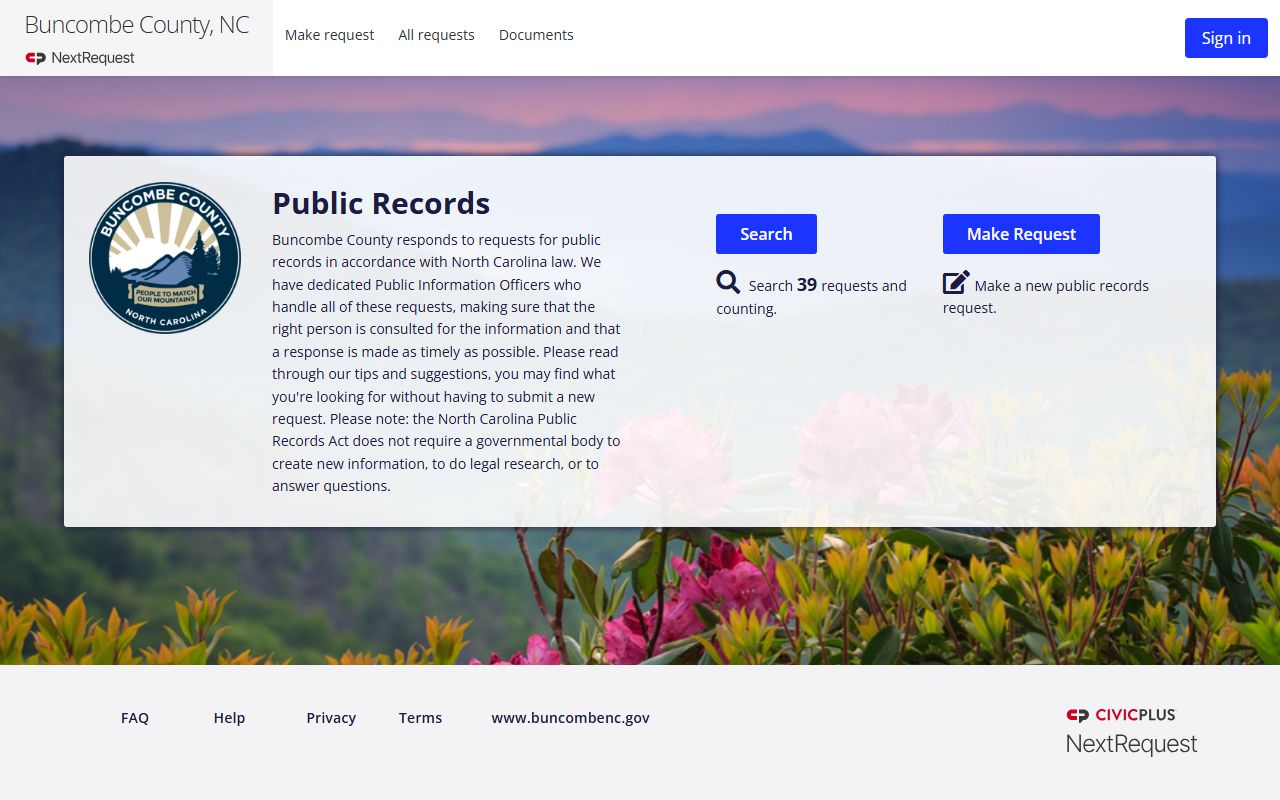
That request portal is useful for sheriff records, but it does not replace a clerk search for filed court charges.
A 2025 NC Auditor release reported issues with inmate money returned after release from Buncombe County Sheriff's Office custody. The release is not a court-charge source, but it is relevant when arrest and custody records involve release money or jail property questions.
The NC Auditor source is shown below.
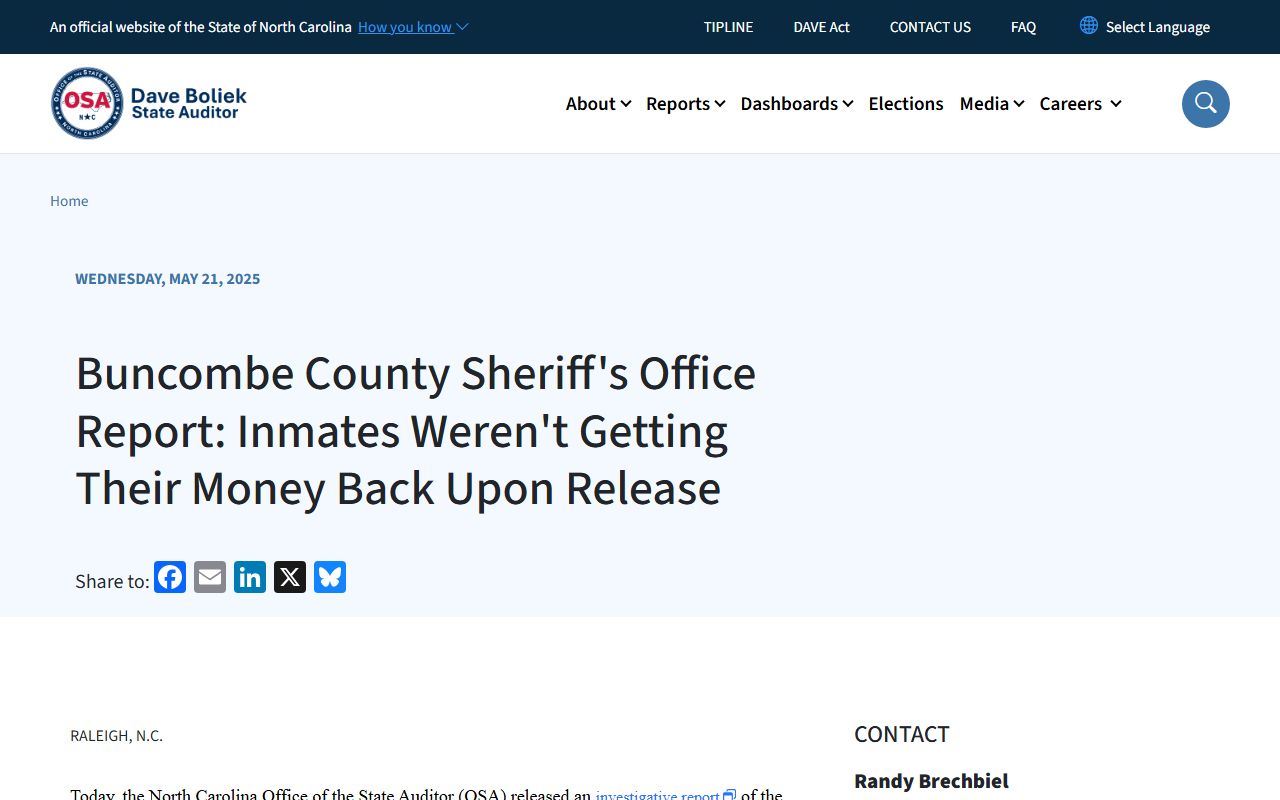
Release-money issues belong with custody records, while the charge status still has to be checked in the court case.
Federal Charges After Arrest
Most Buncombe County arrest records and state court charges route through local law enforcement, the magistrate, the District Attorney, District Court, Superior Court, and the Clerk of Superior Court. Federal prosecutions are different. Buncombe County is in the Western District of North Carolina, and federal criminal matters are handled through federal court systems rather than the Buncombe County trial court file.
The U.S. Attorney Western District of North Carolina source is included for the federal prosecution distinction.
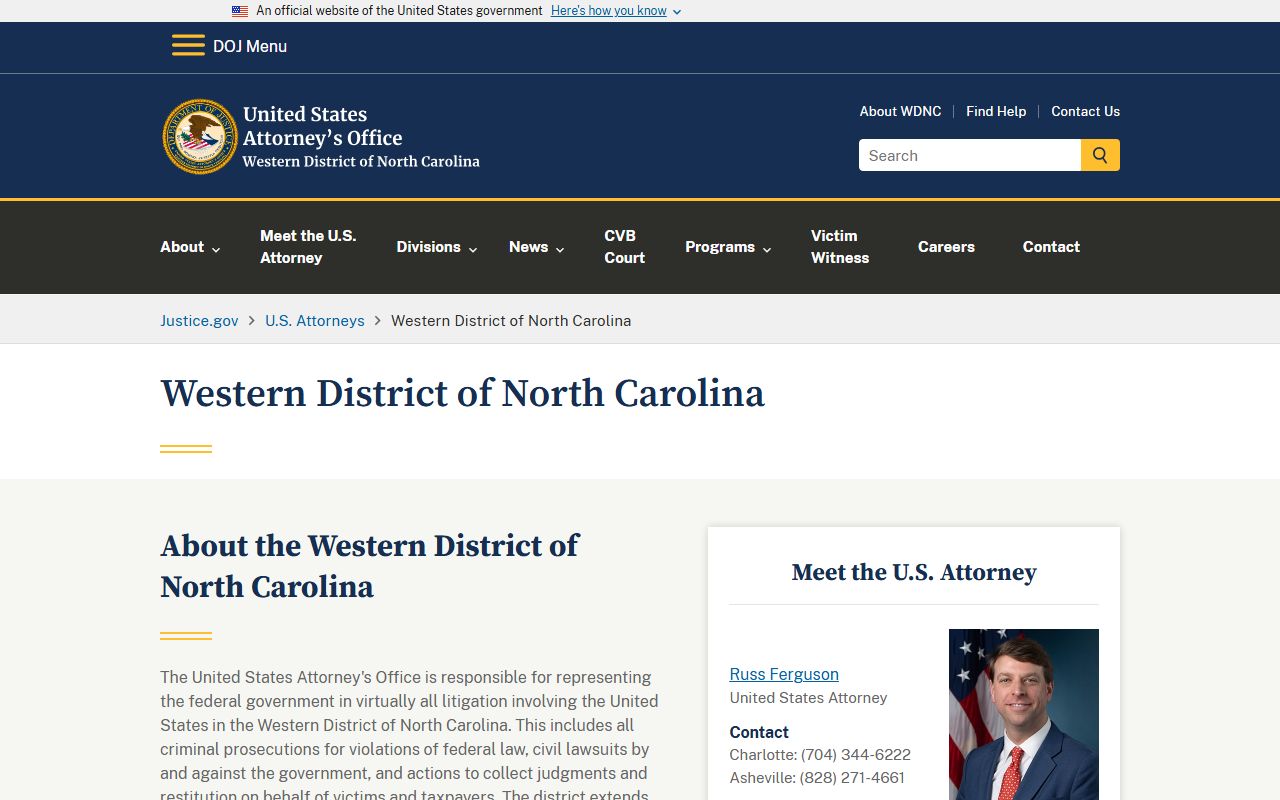
Federal records should be searched through federal court channels, not through a Buncombe County arrest or state charge lookup.
Restricted Buncombe Charge Records
Juvenile records are restricted under Chapter 7B. Expunged records are removed from ordinary public access when a court grants relief under an applicable statute, such as dismissed or not guilty charges under G.S. 15A-146 or certain nonviolent convictions under G.S. 15A-145.5. Mental health proceedings, adoption records, protected identifiers, and sealed court materials also have limits.
Note: A public arrest entry, jail profile, or charge listing should not be treated as a final criminal history without checking the court disposition.